
Modern dating is supposed to create more opportunities for connection, but for many people it feels more draining than exciting. The constant swiping, shallow conversations, and uncertainty of whether someone will actually follow through can leave singles feeling stuck in a cycle of relationship burnout. Instead of feeling hopeful about love, dating can start to feel like another exhausting task on your to-do list.
This phenomenon, often called dating fatigue or burnout in relationships, is becoming increasingly common in today’s digital-first world. Endless profiles, ghosting, and micro-connections that never move forward can chip away at your energy and confidence. Over time, the process doesn’t just make dating feel frustrating — it can also impact your mental health, leading to fatigue, hopelessness, and even anxiety.
But it doesn’t have to stay this way. Recovering from dating exhaustion is absolutely possible when you take intentional steps to reset your mindset, create healthy boundaries, and approach relationships with clarity and balance. In this guide, we’ll explore practical strategies to help you recover from relationship burnout so you can move forward with renewed motivation and a healthier outlook on love.
Table of Contents
What is Dating Burnout?
Relationship burnout is more than just a rough patch or temporary frustration. It’s a state of mental, emotional, and even physical exhaustion that builds up over time due to repetitive dating cycles or ongoing relational stress. When every new connection feels like the same story on repeat, the energy and excitement that dating should bring slowly turn into a heavy sense of fatigue.
Common Signs & Symptoms of Dating Burnout
Recognizing the signs early can help you understand whether you’re facing normal dating challenges or a deeper sense of dating fatigue:
- Feeling drained after dates instead of energized – even pleasant encounters leave you feeling tired rather than uplifted.
- Constant disappointment or hopelessness – believing that meaningful love is out of reach.
- Avoiding dating apps but fearing loneliness – deleting apps out of frustration, then reinstalling them out of fear of missing out.
- Overthinking small issues with partners – minor miscommunications or delays trigger outsized worry and self-doubt.
Why This Matters
Understanding the root of burnout in relationships is crucial before attempting to fix it. Without awareness, many people either push themselves harder — which only deepens exhaustion — or give up on dating entirely. By recognizing that these patterns stem from burnout, you can begin to take steps toward recovering from dating exhaustion and rebuilding a healthier, more sustainable approach to love.
Why Dating Feels Exhausting in 2025
In 2025, what once felt like innovation in dating now often carries the weight of emotional fatigue. Below are key factors turning modern dating into a draining endeavor — and why it’s happening especially among singles in the US, UK, Canada, and Australia.
The “Swipe Culture” Effect — Quantity Over Quality
With apps optimized for quick judgments and endless profiles, dating has become a numbers game. Endless swiping encourages surface-level decisions, and users often exhaust their options without ever feeling deeply seen. A 2025 Forbes/OnePoll survey found that 78% of Gen Z report experiencing dating app burnout — an indicator that this quantity-driven model is creating widespread fatigue.
Ghosting & Micro-Connections — Emotional Rollercoasters
Ghosting (sudden silence after promising conversations) and micro-connections (brief interactions that never develop) lead to uncertainty, insecurity, and emotional whiplash. You may constantly wonder: “Was I ghosted? Did I do something wrong?” These patterns perpetuate dating fatigue and leave your emotional reserves depleted.
Pressure of Radical Openness — Sharing Too Much, Too Soon
Contemporary dating culture often encourages radical transparency: early boundary disclosures, values statements, or identity disclosures. While honesty can be healthy, forcing big conversations too early can fuel anxiety, pressure, and emotional overwhelm. The tension between “tell everything now” and “protect yourself” is real — and exhausting.
Digital-First Dating & Rising Stress: A Global Trend
In the major English-speaking markets (US, UK, Canada, Australia), singles cite increased stress due to the pace and structure of digital-first dating. In the UK, for example, a 2024 Ofcom report showed that major dating apps (Tinder, Hinge, Bumble) lost hundreds of thousands of users between 2023–2024, signaling burnout or disillusionment.
Another telling trend: many users say dating apps are “messing with their mental health” — as prolonged use can lead to emotional exhaustion, lower self-esteem, and anxiety over validation and rejection.
Qualitative research also shows that mobile-online dating fatigue is not just an individual issue, but a broader social phenomenon: repeated exposure to superficial interactions, non-committal patterns, and negative attribution cycles contribute to a collective sense of exhaustion.
The Emotional Impact of Relationship Burnout
When dating stops feeling exciting and starts to feel like an obligation, the effects go far beyond canceled plans or unanswered messages. Relationship burnout doesn’t just impact your dating life — it can take a serious toll on your emotional well-being and the way you approach future connections.
Mental Health Link: Anxiety, Low Self-Esteem, and Loneliness
Dating fatigue often shows up in subtle but powerful ways. Constant disappointment can increase feelings of anxiety, while repeated rejection or ghosting can chip away at self-worth. Over time, many people start to question if something is “wrong” with them, which deepens feelings of low self-esteem. Paired with isolation, this cycle often leads to loneliness — even when you’re surrounded by opportunities to meet new people.
Relationship Patterns That Burnout Creates
Burnout in relationships doesn’t always push people to stop dating altogether. Instead, it can trigger unhealthy patterns, such as:
- Avoidance – pulling back from potential connections out of fear of getting hurt again.
- Unhealthy rebounds – rushing into new relationships just to fill the gap, even if they’re not a good fit.
- Settling – staying in relationships that lack compatibility, simply to avoid starting the process over.
Long-Term Risks: Closing Off From Genuine Connection
Perhaps the biggest risk of ignoring dating exhaustion is the tendency to close yourself off from deeper, more fulfilling relationships. The walls you build to protect yourself can also block you from genuine intimacy, creating a cycle that reinforces the very loneliness you’re trying to escape.
You’re Not Alone
If you’ve been feeling this way, it’s important to remember it’s not just you. Many people are experiencing the same emotional drain, especially in the fast-paced digital dating era. Recognizing that these struggles are a shared human experience — not a personal flaw — is the first step toward recovery and building healthier connections.
How to Recover from Relationship Burnout (Actionable Strategies)
Recovering from dating fatigue requires intentional steps that focus on your emotional well-being, mindset, and relationship habits. The following strategies are designed to help you reset, recharge, and rebuild a healthier approach to dating.
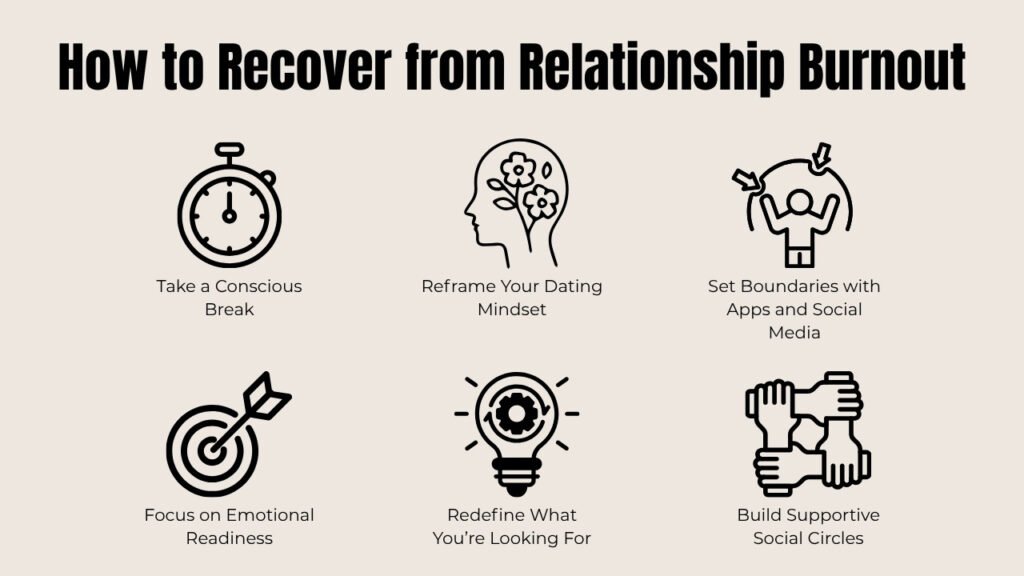
Step 1: Take a Conscious Break
Sometimes the best way to recover is to pause. Give yourself permission to step away from dating apps and romantic pursuits without guilt. Use this time to:
- Reconnect with hobbies and passions that energize you
- Strengthen friendships and family connections
- Focus on self-care routines that restore mental and emotional energy
Timeframes: There’s no one-size-fits-all approach. A conscious break can last a few weeks or a few months. Return to dating only when you feel curious, open, and emotionally ready — not pressured by loneliness or societal expectations.
Step 2: Reframe Your Dating Mindset
Shift your perspective from outcome-driven (“I must find a partner now”) to experience-driven (“I want to learn, connect, and grow”). This reframing helps reduce anxiety and pressure while fostering curiosity and enjoyment in the process.
- Let go of perfectionism — no date will be flawless, and that’s okay
- Accept that setbacks are part of the journey, not a reflection of your worth
Step 3: Set Boundaries with Apps and Social Media
Digital dating can exacerbate relationship burnout. Protect your energy by setting boundaries:
- Limit swiping or scrolling time (e.g., 30 minutes per day)
- Delete apps temporarily if they trigger stress or comparison
- Explore offline ways to meet people, such as hobby groups, community events, or volunteering
Boundaries help you engage intentionally, rather than exhaustively chasing endless matches.
Step 4: Focus on Emotional Readiness
Before diving back into dating, check in with yourself. Ask: Am I dating from a place of loneliness, or from wholeness and self-awareness?
- Journaling can help clarify your thoughts and emotions
- Therapy or coaching provides tools to process burnout and past disappointments
- Trusted friends can offer perspective and support
Dating from emotional readiness reduces the likelihood of repeating burnout patterns.
Step 5: Redefine What You’re Looking For
Clarifying your values, lifestyle preferences, and deal-breakers is crucial. Intentional dating — prioritizing quality over quantity — is especially effective in helping singles avoid mismatched connections that drain energy.
- Identify what matters most in a partner beyond surface-level traits
- Focus on alignment with core values rather than simply “filling time”
- Use this clarity to make dating feel purposeful and rewarding
Step 6: Build Supportive Social Circles
Healthy relationships begin with strong social support. Strengthen friendships and non-romantic connections to practice meaningful interaction without pressure.
- Join interest-based communities to meet people organically
- Cultivate friendships that inspire, energize, and validate your growth
These networks not only provide emotional support but also reduce dependency on dating for fulfillment, helping prevent future burnout.
This section addresses key pain points of relationship burnout, offers practical solutions, and naturally integrates SEO keywords like dating fatigue, recovering from dating exhaustion, and burnout in relationships.
When to Seek Professional Support
While relationship burnout can often be managed through self-care and intentional strategies, there are times when professional support becomes essential. Recognizing these signs early can prevent prolonged emotional strain and help you regain control over your dating life.
Signs Burnout is Impacting Mental Health Significantly
Consider seeking professional help if you notice:
- Persistent anxiety or depressive feelings related to dating
- Low self-esteem or negative self-talk that affects daily life
- Chronic loneliness or emotional numbness despite efforts to connect
- Difficulty maintaining boundaries or recurring patterns of unhealthy relationships
These are indicators that burnout has gone beyond dating fatigue and is affecting overall well-being.
How Professional Support Can Help
Therapy, coaching, and support groups provide practical tools and perspectives to manage burnout:
- Therapy: Helps process past relationship trauma, build emotional resilience, and develop coping strategies
- Dating or relationship coaching: Offers guidance on intentional dating, communication skills, and boundary-setting
- Support groups: Connects you with others experiencing similar challenges, fostering understanding and shared learning
By working with professionals, you gain structured support to navigate dating challenges, rebuild confidence, and recover more effectively from dating exhaustion.
Normalize Asking for Help
Seeking help is not a sign of weakness — it’s a proactive step toward healthier relationships. Normalizing professional support reduces the stigma around mental health, making it easier for you and others to prioritize emotional well-being while dating.
Moving Forward: Creating Healthy, Sustainable Relationships
Recovering from relationship burnout is only the first step. To create lasting, fulfilling connections, it’s essential to approach dating with balance, intention, and self-awareness. Here are practical tips to maintain that balance as you reenter the dating world.

Start Small
Avoid overwhelming yourself by jumping back into multiple apps or pursuing too many matches at once. Focus on one platform or a limited number of connections at a time. This approach reduces dating fatigue and allows you to engage meaningfully with potential partners.
Prioritize Meaningful Conversations
Shift your focus from quantity to quality. Instead of swiping endlessly or trying to impress multiple matches, invest time in conversations that foster genuine connection. Ask thoughtful questions, listen actively, and look for alignment in values and goals rather than superficial traits.
Keep Self-Care a Constant, Not a Backup
Self-care should be an ongoing practice, not something you only consider when dating becomes stressful. Regularly check in with your mental, emotional, and physical well-being. When self-care is a priority, you are more resilient, confident, and ready to engage in healthy relationships.
Embrace a Long-Term View
Dating is a journey, not a sprint. Avoid putting undue pressure on yourself to find “the one” immediately. Celebrate small wins — meaningful conversations, new connections, personal growth — and approach dating as an opportunity to learn about yourself and others.
By integrating these strategies, you can approach dating in a sustainable way, reducing the risk of burnout in relationships while fostering deeper, more meaningful connections over time.
Conclusion
Relationship burnout is a common experience in today’s fast-paced dating world, and it doesn’t mean you’ve failed at love. Feeling exhausted, frustrated, or disillusioned after repeated dating challenges is normal — and recovery is entirely possible.
The key is to take small, intentional steps to reset your approach. Whether it’s taking a conscious break, setting boundaries, focusing on emotional readiness, or prioritizing meaningful connections, each action brings you closer to healthier and more fulfilling relationships.
By slowing down and focusing on your values, self-awareness, and emotional well-being, dating becomes less about exhaustion and more about genuine connection. With patience and intention, love can feel rewarding again — not just exciting, but deeply fulfilling.
Frequently Asked Questions
1. What causes relationship burnout?
Relationship burnout occurs when the emotional, mental, or physical demands of dating become overwhelming. Common causes include repeated rejection, ghosting, shallow or unfulfilling connections, and pressure from swipe-based dating culture. Over time, these patterns can lead to dating fatigue, low self-esteem, and avoidance behaviors.
2. How do I know if I’m experiencing dating fatigue or just normal frustration?
Normal frustration is temporary and situational, while dating fatigue or burnout is persistent. Signs include:
- Feeling exhausted or drained after most dates
- Chronic disappointment or hopelessness about finding a partner
- Avoiding dating apps despite wanting connection
- Overthinking minor issues in relationships
If these patterns continue over weeks or months, you may be experiencing burnout rather than occasional frustration.
3. Is taking a break from dating healthy or harmful?
Taking a conscious break is not only healthy but often necessary for recovery. A pause allows you to:
- Reconnect with yourself and your interests
- Recharge emotionally and mentally
- Reassess your relationship goals and values
When done intentionally, a break reduces burnout in relationships and sets the stage for healthier, more sustainable connections.
4. How can I enjoy dating again after feeling exhausted?
Recovering enjoyment in dating involves a mix of self-care, mindset shifts, and intentional strategies:
- Start small, focusing on quality over quantity
- Set boundaries with dating apps and social media
- Prioritize meaningful conversations over casual swiping
- Reconnect with hobbies, friends, and supportive communities
These steps help you rebuild confidence, curiosity, and excitement for dating without repeating the same exhausting patterns.
5. Does therapy help with relationship burnout?
Yes. Therapy, coaching, or support groups provide guidance to:
- Process past disappointments and emotional wounds
- Develop coping strategies for stress and dating fatigue
- Improve self-awareness, communication, and relationship skills
Professional support normalizes the experience, reduces stigma, and equips you to recover from dating exhaustion effectively.
Check out our other blogs for practicle advice on dating, social skills, and emotional well-being.