
Clarity is something we all want, but many of us rarely feel it. Some days your mind feels full, your thoughts feel messy, and even simple decisions feel harder than they should. That heavy, scattered feeling is what I call low clarity, and it shows up in your thinking, your choices, and even your emotions.
In this guide, I want to help you remove that mental fog with simple habits that are easy to understand and easy to apply. Nothing complex, nothing overwhelming, just clear steps that can genuinely make your day feel lighter and more focused.
I’ll also share a few things that helped me personally when I struggled with feeling mentally overloaded or pulled in too many directions. My hope is that these ideas feel real, grounded, and useful, so you can take what fits your life and start feeling more clarity from today.
Table of Contents
What Clarity Truly Means and Why It Matters
Clarity is the simple feeling of knowing what is going on in your mind. It helps you understand your thoughts, your feelings, and the next step you want to take. When you have clarity, life feels easier. You think better, make decisions faster, and feel more grounded. Without clarity, even small tasks can feel confusing or heavy, and your day starts to feel like a mix of noise and pressure.
Clarity matters because it gives you a sense of direction. It removes the guessing and the worrying that keep your mind busy. When your thoughts are clear, you save time, protect your energy, and focus on what truly matters to you.
The Difference Between Clarity and Motivation
Motivation is the push that helps you start something, but clarity is what helps you stay consistent. Motivation comes and goes. Some days you feel ready to do everything, and other days you feel like doing nothing. Clarity is different. Clarity helps you understand what needs your attention and why it matters, even when you do not feel motivated.
When you have clarity, you make better choices. You feel less stressed because your mind knows what to focus on. You waste less time jumping between tasks or overthinking. This creates emotional stability, better productivity, and a calmer mind. Motivation helps you move, but clarity helps you move in the right direction.
When clarity is missing, your mind fills up with mental noise. You start asking yourself too many questions, and every decision feels heavier than it actually is. This is what creates confusion and decision fatigue. Your brain gets tired because it is trying to handle too many things at once.
The Root Causes of Low Clarity
Information overload
Your brain absorbs more content than it can process. Social media, notifications, messages, news, videos. When too much information enters your mind, it becomes harder to hear your own thoughts.
Too many open loops and unresolved tasks
These are unfinished tasks or decisions you have not closed. Even small ones stay in your mind and pull your attention away from what matters.
Emotional clutter and overthinking
Thoughts that keep repeating, feelings you did not deal with, or worries about what might happen. These create fog in your mind and make simple situations feel complicated.
Lack of structure or systems
Without a clear system for your day, everything feels random. You keep jumping between tasks, and your brain gets tired from managing too many things at once.
Environmental distractions
Your surroundings affect your mind more than most people realize. A messy desk, constant noise, or a distracting environment makes it hard to think clearly.
Clarity grows when you understand what blocks it. Once you see the causes, it becomes easier to take simple steps that help your mind feel lighter, calmer, and more focused.
The Subtract → Simplify → Systemize Framework for Daily Clarity
This framework helps you clear your mind step by step. First you remove the noise, then you make life easier, and finally you build small systems that keep your mind steady. Let’s break it down in a simple, practical way.
Step 1: Subtract
Subtracting means taking away the things that make your mind heavy. Most people try to fix their clarity by adding more tools or routines, but clarity improves faster when you remove what drains your attention.
Things you can subtract for instant clarity:
- Unnecessary notifications, because every ping pulls your mind away and adds tiny stress.
- Commitments that no longer fit your life, because saying yes to everything keeps you overwhelmed.
- Low return tasks, because spending time on things that do not matter blocks your real progress.
- Digital clutter, like too many open tabs or apps you do not use, because it increases mental noise.
- Small decisions that repeat daily, because your brain gets tired from choosing all the time.
A small shift that helped me was turning off almost every notification except calls. The silence felt strange at first, but within a day I could think more clearly. Sometimes clarity comes from removing just one small thing you did not realize was draining you.
Step 2: Simplify
Simplifying means making your tasks and routines easier so your mind does not get confused or stuck. When things are simple, you take action faster and with less stress.
Ways to simplify your day:
- Break tasks into tiny steps, because big tasks feel heavy and make you freeze.
- Keep a one-page to-do list, because seeing everything in one place keeps your mind calm.
- Stick to a simple morning routine, because starting your day with clarity sets the tone.
- Focus on only one or two key tasks a day, because doing less with intention gives better results.
- Remove extra planning, because too much planning creates stress and decision pressure.
Examples that work well:
- A morning routine with three small steps: set intention, check your top tasks, and get moving.
- A light daily plan where you choose only your top three tasks.
- A simple end-of-day summary where you write what needs attention tomorrow.
Simplicity gives your mind space to breathe. When things are easy to understand, clarity comes naturally.
Step 3: Systemize
Systemizing means creating small repeatable processes that guide you when life gets busy. Systems help your mind stay focused without needing constant motivation or energy.
Systems that support clarity:
- Decision templates, because having a rule for common choices reduces overthinking.
- A weekly clarity review, because checking your progress and cleaning your thoughts keeps you steady.
- A simple prioritization method, because knowing what to do first removes guesswork.
- A morning plan you repeat daily, because routines create mental stability.
- A rule for selecting tasks, because it stops you from wasting time choosing what to do next.
Examples that keep life simple:
- A yes-no rule for commitments: if it does not support your goals, let it go.
- A weekly 10 minute reset where you review your week and prepare for the next.
- A daily priority system: one important task, one helpful task, one easy task.
Systems remove mental fog because your brain does not have to figure out everything from scratch. They protect your clarity even when your mood, energy, or day is unpredictable.
This framework works because it takes the pressure off. You remove what drains you, make life simpler, and build habits that keep clarity steady every day.
Simple Habits That Improve Daily Clarity
These habits are simple, practical, and easy for anyone to follow, even on busy days. You do not need big routines or complicated systems. Small actions done regularly can clear your mind, reduce stress, and help you move through the day with intention. Let’s walk through each habit in a natural and simple way so you can start using them right away.
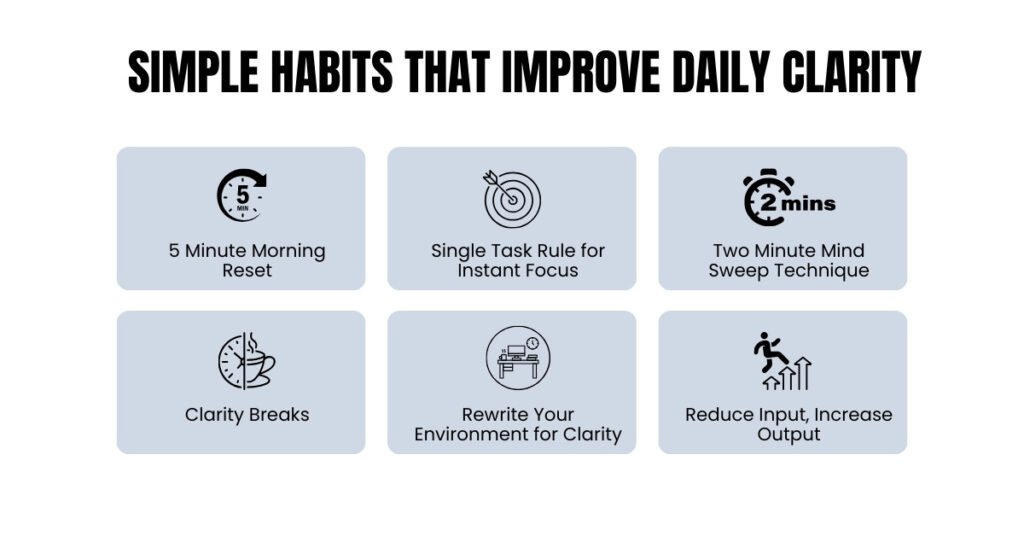
The 5 Minute Morning Reset
This routine helps you start your day with a clear mind instead of jumping straight into stress or distractions. It gives your brain a quiet moment to understand what matters before the world pulls your attention in different directions.
- Write your top three priorities, because knowing the three things that matter most helps you avoid wasting time on tasks that do not move your day forward. It keeps your mind focused and gives your day a clear direction.
- Note the distractions you might face, like phone notifications or noisy places, because when you expect them, you are less surprised and more prepared to stay on track. Awareness makes distractions weaker.
- Set a simple intention, such as being calm, patient, or consistent, because a small intention guides your mindset and helps you respond better when things get messy.
- Keep this reset short so it feels natural. You want it to support your morning, not pressure you. Even a few minutes can shift how the rest of your day goes.
This reset works because it gives your mind a clear starting point instead of leaving it to guess and wander.
The Single Task Rule for Instant Focus
Multitasking feels productive, but it actually makes your mind jump around and lose clarity. The single task rule teaches your brain to focus on one thing at a time, which makes you calmer, faster, and more effective.
- Pick one task and stay with it until it is done, because switching between tasks forces your brain to restart again and again. Staying with one thing keeps your mind in one direction.
- Complete the task fully before you move on, because half done work stays in your mind and builds mental clutter. Finishing tasks gives you a sense of progress and mental relief.
- Take a small pause after finishing, even 20 to 30 seconds, because it clears your mental space and prepares your brain for the next task.
- Reduce small distractions around you by keeping your phone away or closing extra tabs. This gives your mind only one place to focus, which makes clarity easier.
This rule gives your mind room to think and helps you stay in a clear flow instead of feeling scattered.
The Two Minute Mind Sweep Technique
Your mind collects random thoughts all day, such as reminders, worries, or to-dos. When they build up, your mind feels crowded and unclear. A mind sweep helps you clear those thoughts so your brain can breathe.
- Write down everything that pops into your head, even the small things, because your mind relaxes when it no longer has to hold all the information at once. It creates instant mental space.
- Use whatever you have nearby, like a notes app, a small paper, or a voice memo, so you can do it anywhere without delaying it. The goal is to get the thoughts out quickly.
- Keep writing until your head feels lighter. This might take one minute or three, but what matters is that you empty the noise that keeps distracting you.
- Use this technique anytime your mind feels crowded, not only in the morning or at night. A quick mind sweep during a busy day can bring instant clarity.
This habit works because it moves your thoughts from your head to a safe place, allowing your mind to reset and focus again.
Clarity Breaks
Your brain is not designed to stay in full focus all day. Small breaks give your mind a chance to reset, so you can think clearly instead of forcing yourself through mental fog.
- Take a short break every 40 to 50 minutes, because your focus naturally drops after that and a small reset helps you come back sharper.
- Step away from screens for a moment, since even a few minutes of no digital input can calm your mind and reduce stress.
- Use simple break activities like breathing slowly, stretching, or walking for a minute, because these actions relax your body and clear your thoughts.
- Keep the break short, since a short pause refreshes you without breaking your flow or rhythm.
These breaks keep your mind steady, clear, and ready for the next task.
Rewrite Your Environment for Clarity
Your environment affects your thoughts more than you realize. A small change in your space can instantly shift how calm or focused your mind feels.
- Clear your desk for two minutes, because a clean space helps your brain relax and reduces mental noise.
- Keep only the things you need in front of you, so your attention is not pulled away by clutter or random items.
- Place your phone out of sight, because even seeing it can distract your mind and pull your focus.
- Let natural light into your space when possible, as it supports a clearer mood and sharper thinking.
A few small adjustments can make your space work with your mind, not against it.
Reduce Input, Increase Output
Your mind gets foggy when you consume too much content. Reducing what goes in gives your mind the space it needs to think clearly and stay centered.
- Limit your scrolling and random content consumption, because constant input fills your mind with thoughts that do not matter.
- Spend more time taking action, so your mind shifts from absorbing noise to creating something meaningful.
- Follow a simple rule like no morning scrolling, which gives your brain a quiet start to the day.
- Keep the content you consume intentional, so your mind stays clear and focused instead of overloaded.
When you reduce the noise coming in, clarity naturally becomes easier to reach.
Advanced Yet Simple Practices for Deep Life Clarity
These practices are for moments when you want a deeper sense of direction without making your life complicated. They are simple, easy to follow, and help you understand your goals, choices, and progress in a clear and honest way.

The One Page Life Overview
This practice helps you see your whole life on a single page. When everything is visible and simple, it becomes much easier to know what matters and what needs your attention.
- Write your main goals, because seeing them clearly reminds you what you are working toward and keeps your mind focused on what matters most.
- Note your current challenges, since naming what is blocking you makes the problem feel smaller and easier to handle.
- Add your next steps, even small ones, so you always know what action to take without feeling lost or stuck.
- Keep everything on one page, because a simple view gives your brain clarity without overwhelming you.
This overview works because it removes guesswork and gives you a gentle sense of direction every day.
The 3 Question Decision Filter
This tool helps you make clear decisions without overthinking. It cuts through confusion and gives you a simple way to choose what is right for you.
- Ask if this decision supports your goals, because it stops you from choosing something that pulls you away from your direction.
- Ask if this choice feels right for your current energy and time, so you do not push yourself into commitments that drain you.
- Ask if this is truly necessary, because many decisions feel important when they are not.
- Use this filter for small and big choices to build confidence and reduce mental pressure.
This filter works because it gives your mind a structured way to think without making anything complicated.
Weekly Clarity Review
This weekly practice helps you stay aligned with your goals while keeping your mind calm and organized. It only takes around fifteen minutes, but it keeps your entire week on track.
- Review your progress, so you can see what moved forward and what made you feel proud.
- Look at any problems or blocks, because noticing them early makes them easier to fix.
- Set your top priorities for the next week, so you enter it with a clear plan instead of guessing.
- Keep the review light and honest, because the goal is clarity, not perfection.
This habit resets your direction and helps you start each week with a clear and confident mind.
Conclusion
Clarity makes life feel lighter, calmer, and more intentional. When your mind is clear, decisions become easier, your day feels more organized, and you move through life with a sense of direction instead of feeling pulled around by stress or confusion.
The main idea to remember is that clarity is not about doing more. It is about removing the noise that crowds your mind. When you let go of distractions, clutter, and unnecessary pressure, you naturally create space for better thoughts, better choices, and better actions.
Small habits play a big role in this. A simple morning reset, a quick mind sweep, or a short clarity break can shift your entire day. These tiny steps may look small, but they build a stronger, clearer mind over time.
Clarity is something anyone can build, and the more you practice these simple habits, the more your daily life starts to feel intentional, steady, and easy to navigate.
Frequently Asked Questions
How do I know if I need more clarity in my daily life?
You may need more clarity if you often feel mentally heavy, distracted, or unsure about what to do next. If small decisions feel tiring or your day feels messy and rushed, these are signs your mind needs more space and direction.
How long does it take to see changes from these clarity habits?
Most people feel small shifts within a day or two, especially with habits like the morning reset or the mind sweep. Bigger, steady improvements happen over time as your mind gets used to a calmer and more organized routine.
Can these clarity habits help with stress and overwhelm?
Yes, because clarity removes the mental noise that often creates stress. When you know what matters and what to ignore, you feel more relaxed and less pulled in different directions.
What if I forget to follow these habits on busy days?
It is completely normal. Clarity habits are meant to support your life, not pressure you. If you miss a day, just start again. Even one small habit done consistently is enough to make a difference.
Do I need special tools or apps to improve clarity?
No, you can use whatever you already have. A notes app, a piece of paper, or a simple routine is enough. Clarity comes from your habits, not from fancy tools.