Life moves fast today. Most of us start the day with a full mind and end it feeling the same way. There’s always something waiting for our attention, and that constant pressure makes stress build up before we even notice it.
Stress is your body’s alarm system. It turns on when something feels too difficult or too demanding. A little stress can help you stay alert, but when it sticks around, it makes you feel tired, tense, and overwhelmed. We deal with nonstop messages, busy routines, and the pressure to stay productive all the time. Our brains rarely get a break, and that makes even small problems feel heavy.
This isn’t another list of random tips. You’ll get one simple step-by-step method you can follow anytime stress shows up. You’ll know exactly what to do next instead of guessing.
Everyone struggles with stress. It doesn’t mean you’re weak or behind. Stress is something you can learn to understand and manage, and these steps will help you feel calmer and more in control.
Table of Contents
Understanding Stress: What’s Really Happening in Your Body and Mind
Stress is your body’s natural response when something feels demanding, scary, or uncertain. Think of it as an alarm system: it helps you act faster when you need to. That alarm is useful for short bursts, but when it keeps ringing, it wears you out.
Short-term stress vs long-term stress
Short-term stress is what you feel before a test, a job interview, or a big meeting. It’s sharp, sudden, and usually goes away after the event. Long-term stress sticks around for weeks, months, or longer. It’s the steady pressure from chores, money worries, work overload, or an unresolved problem. Short-term can energize you. Long-term drains you.
How unmanaged stress affects day-to-day life
When stress stays on, it changes how you feel and act. Your sleep can get chopped up or shallow. You might feel low on energy or snap at people more easily. Concentrating becomes harder, and small problems feel much bigger. These changes make it harder to solve the things that caused the stress in the first place, so the cycle keeps going.
A couple of quick, useful facts
Simple body-first steps—like slowing your breathing or changing your posture—can calm the nervous system fast.
Keeping stress only short and occasional makes it much easier to bounce back; when it becomes constant, it starts to affect sleep, mood, and focus.
The Step-by-Step Method to Manage Stress
This is the core of the guide. These steps work because they follow how your mind and body actually respond to stress. Once you understand this process, you can manage stress in a calmer, more confident way.
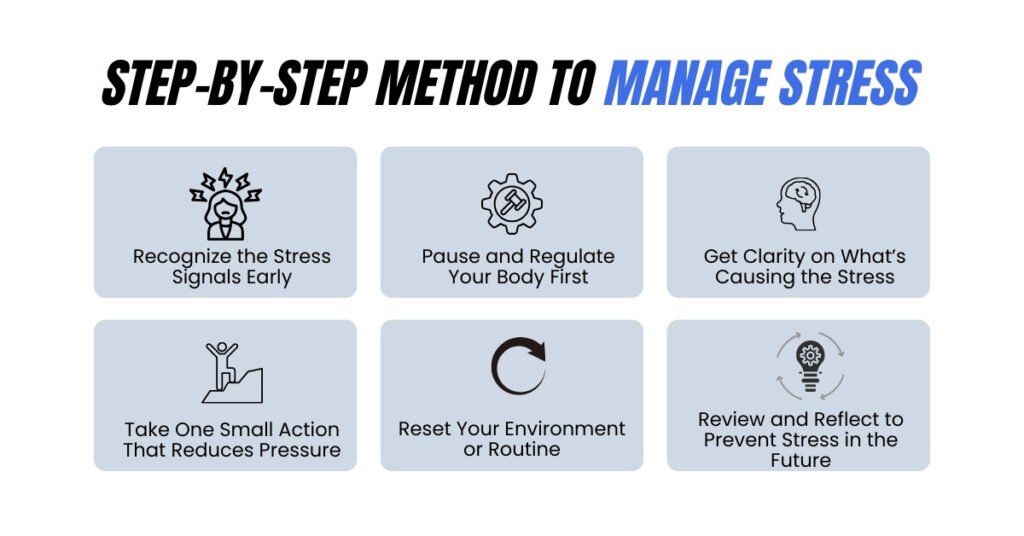
Step 1: Recognize the Stress Signals Early
Stress rarely appears out of nowhere. It usually starts with small changes in your body and your thoughts. You may feel your jaw tighten, your shoulders stiffen, or your breathing become shorter. Some people feel a heavy feeling in their chest. Others get restless, distracted, or irritated. These tiny signs are your body trying to say something is off.
Stress grows when it goes unnoticed. If you catch it early, you can calm yourself before it becomes overwhelming. Early awareness is like noticing a small fire when it’s still easy to put out. The sooner you notice it, the easier it is to manage the rest of your day.
Here’s a quick check you can do anytime without tools or preparation:
Take a slow breath and ask yourself three questions:
- What is my body doing right now?
- What thoughts are running through my mind?
- Is there something bothering me even a little?
This short pause helps you step out of autopilot and see what’s actually happening.
Step 2: Pause and Regulate Your Body First
When you feel stressed, your body enters alert mode. Your heart beats faster. Your breathing changes. Your muscles tense up. In this state, your brain is not focused on solving problems; it’s focused on surviving. That’s why thinking clearly becomes harder. If you calm your body first, your brain gets the message that you are safe, and it becomes easier to think normally again.
Slow breathing is one of the quickest ways to settle stress. Try this: breathe in slowly, pause for a moment, and breathe out even slower. Do this for one minute.
Grounding is another easy tool. Place your feet flat on the floor and notice how steady it feels.
You can also relax your shoulders, unclench your jaw, or stretch your neck. These tiny actions tell your nervous system to slow down.
Studies show that slow breathing and grounding can reduce the body’s stress response in under a minute because they shift the nervous system away from alarm mode.
Step 3: Get Clarity on What’s Causing the Stress
Once your body is calmer, you can think more clearly. This is the moment to ask yourself a simple question: What exactly is stressing me right now? Often the real reason is not the first thing that comes to mind. For example, you might think you’re stressed about a task, but deep down you might be worried about running out of time or disappointing someone.
Stress builds when your mind holds multiple small worries at the same time. You might feel pressure from work, personal life, money, or health all together. When these worries sit in your mind without being named, they feel bigger and heavier. Once you identify them, they lose some of their power.
Here’s an easy way to understand your stress:
Divide your thoughts into two groups — what you can control and what you can’t.
Things you can control include your actions, your choices, and how you respond.
Things you can’t control include other people’s reactions, unexpected events, or the past.
Focusing on the first group helps you feel stronger. Accepting the second group helps you feel lighter.
Step 4: Take One Small Action That Reduces Pressure
Once your body is calmer and you understand what’s bothering you, the next step is to do something tiny that reduces the pressure. Stress grows when we stay still and think too much. But even the smallest action sends a message to your brain that you’re not stuck. Movement creates momentum, and momentum creates relief.
You don’t need a big plan. You just need one tiny move that makes things feel lighter. Here are a few examples:
• Write down the top three things on your mind.
• Tidy a small part of your space, like your desk or bed.
• Send the one message or email you’ve been avoiding.
• Drink a glass of water slowly.
• Step outside for a minute and breathe.
• Break a big task into the smallest first step you can think of.
These actions are small on purpose. They’re fast, simple, and easy to say yes to.
When you take even a tiny step, your brain starts shifting from stress mode to problem-solving mode. You feel more in control, and the next step becomes easier. This is why starting small is more effective than trying to fix everything at once.
Step 5: Reset Your Environment or Routine
Your surroundings affect how your mind feels. A cluttered space, loud noise, stale air, or too many distractions can make stress worse without you realizing it. Changing your environment even slightly can calm your mind and make you feel more grounded.
You don’t need a full makeover. These quick resets work well:
• Clear one small area around you.
• Open a window for fresh air.
• Take a short walk, even for two minutes.
• Stretch your body and fix your posture.
• Drink water or wash your face to refresh your senses.
These tiny resets help your brain feel safe and supported again.
Your brain uses cues from your environment to decide how you should feel. A messy or stressful space can keep your brain alert. A cleaner, calmer space tells your mind it’s okay to relax. This is why changing your surroundings helps you reset faster.
Step 6: Review and Reflect to Prevent Stress in the Future
Stress is easier to manage when you understand your patterns. Reflection helps you see what triggered your stress, what helped you calm down, and what you want to handle differently next time. Without reflection, stress keeps repeating in the same way.
Here are questions that take less than two minutes but give you big clarity:
- What caused my stress today?
- What helped me feel better?
- What can I do next time to make things easier?
These questions turn stressful moments into learning moments.
A short weekly check-in helps you notice early signs before they grow. It gives you a chance to adjust your routine, remove things that drain you, and plan your energy better. Over time, this habit builds a stronger, calmer version of you.
Additional Tips and Simple Tools to Make Stress Management Easier
Managing stress becomes much easier when your daily routine naturally supports your well-being. Simple habits like waking up a little earlier, taking short breaks during work, and keeping your space less cluttered can make a big difference. These small habits create a steady foundation, so stress doesn’t hit you as hard.
You don’t need expensive apps or fancy equipment to feel better. A notebook can become your journaling space where you write down what’s on your mind. A timer can help you work in short, focused bursts so you don’t feel overwhelmed. Free breathing audios online can guide you through calm breathing when your mind feels too busy. Even a five-minute walk can reset your mood and give your mind a break.
If you feel stressed often, try setting small routines like drinking water before you start work, checking in with yourself at midday, or stretching your body whenever you switch tasks. These tiny actions take very little time but quietly reduce your stress throughout the day. The goal is not to be perfect. The goal is to make life feel lighter, step by step.
Short breaks and small movements during the day can help your brain stay focused and relaxed. Even tiny pauses give your mind space to reset, which lowers stress over time.

Conclusion
Managing stress doesn’t have to feel complicated. The simple step-by-step method you learned here works because it follows how your mind and body naturally respond. You recognize the early signals, calm your body, understand what’s really bothering you, take one small action, reset your environment, and reflect so you grow stronger over time. Each step is doable, even on busy or difficult days.
You don’t have to wait for the perfect moment to try this. Pick one step and practice it today. Maybe it’s checking in with your body, taking a slow breath, or clearing a small part of your space. Every small step teaches your mind that you’re in control, even when life feels heavy.
Remember this as you move forward: stress is not a sign that you’re failing. It’s simply a signal that your mind and body need care. Stress does not define you. The skills you build, the choices you make, and the small changes you practice are what shape your strength. With time, patience, and simple tools, you can handle stress with more ease and confidence. You’re capable of this, and you’re not doing it alone.
Frequently Asked Questions
What is the first thing I should do when I start feeling stressed?
Start by noticing the early signs. Take a slow breath, check in with your body, and pause before reacting. This gives your mind space to think clearly instead of getting carried away by pressure.
How long does it take to feel less stressed using this method?
Most people feel calmer within a few minutes, especially after slowing their breathing or taking a small action. The more you practice the steps, the faster your mind and body respond.
Can small actions really help with stress?
Yes. Stress grows when you stay stuck. Even a tiny step—like cleaning your desk, writing down a worry, or drinking water—tells your brain you’re regaining control, which reduces pressure almost immediately.
What if I don’t know what’s causing my stress?
That’s normal. Stress often comes from hidden worries. Use the simple clarity questions: What’s bothering me? What can I control? What can’t I control? This helps you uncover the real source.
How can I prevent stress from building up again?
A short weekly reflection can make a big difference. Look at what stressed you, what helped you, and what you want to adjust next week. Small reviews help you stay aware and stop stress from piling up.