
Effective communication is the cornerstone of success in both personal and professional life. Whether it’s building strong relationships, advancing your career, or simply expressing your thoughts clearly, the ability to convey ideas effectively can open countless doors.
Yet, many people struggle with common challenges such as misunderstandings, lack of confidence, poor listening habits, and difficulty expressing themselves clearly. These obstacles can lead to frustration, missed opportunities, and weakened relationships.
In this blog, you will learn how to improve communication skills through practical, easy-to-implement techniques that deliver real results. By applying these strategies, you can start speaking with confidence, listening actively, and connecting more effectively with everyone around you.
Table of Contents
Why Communication Skills Matter
Strong communication skills are more than just a soft skill—they are essential for personal growth and professional success. Improving the way you express yourself and understand others can transform your relationships, boost your confidence, and open doors to new opportunities.
Impact on Personal Life
- Building Strong Relationships: Effective communication fosters trust, understanding, and meaningful connections with family, friends, and peers. When you express yourself clearly and listen actively, relationships become stronger and more fulfilling.
- Reducing Misunderstandings: Miscommunications can lead to conflicts and frustration. By improving your communication skills, you can clarify your intentions and prevent unnecessary misunderstandings in everyday interactions.
- Improving Emotional Intelligence: Communication isn’t just about words—it’s also about empathy and understanding emotions. Enhancing your communication skills helps you read social cues, respond appropriately, and manage relationships with emotional intelligence.
Impact on Professional Life
- Career Growth and Leadership Opportunities: Clear and confident communication is critical for leadership. Professionals who communicate effectively are more likely to gain promotions, inspire teams, and influence decision-making.
- Enhancing Teamwork and Collaboration: In any workplace, collaboration depends on how well team members share ideas and resolve issues. Strong communication ensures smoother workflows, fewer conflicts, and higher productivity.
- Better Client and Stakeholder Interactions: Whether presenting a project, negotiating a deal, or managing a client, effective communication builds credibility, trust, and stronger professional relationships.
Common Communication Challenges People Face
Even the most capable individuals can struggle with communication at times. Recognizing these common challenges is the first step toward improvement.
- Fear of Speaking or Low Confidence: Many people hesitate to express their thoughts because they fear judgment or failure. This lack of confidence can prevent them from sharing valuable ideas and connecting meaningfully with others.
- Difficulty Expressing Thoughts Clearly: Struggling to articulate ideas can lead to confusion and misunderstandings. Without clarity in speech or writing, even the best intentions may be misinterpreted.
- Poor Listening Habits: Effective communication isn’t just about speaking—it’s also about listening. Interrupting, multitasking, or not paying full attention can prevent understanding and make others feel undervalued.
- Misinterpretation of Verbal and Non-Verbal Cues: Body language, tone of voice, and facial expressions all play a critical role in communication. Misreading these cues or sending conflicting signals can create confusion and conflict.
- Overcoming Cultural and Social Differences: In diverse environments, differences in language, customs, and social norms can hinder effective communication. Awareness and adaptability are essential to bridge these gaps.
By identifying these challenges, you can take targeted steps to improve. In the next section, we will explore 10 simple techniques on how to improve communication skills that help overcome these common obstacles and build stronger connections.
10 Simple Techniques to Improve Communication Skills
Improving communication skills doesn’t have to be complicated. By practicing specific techniques consistently, you can become a more confident, clear, and effective communicator. Here are 10 practical strategies to get started:
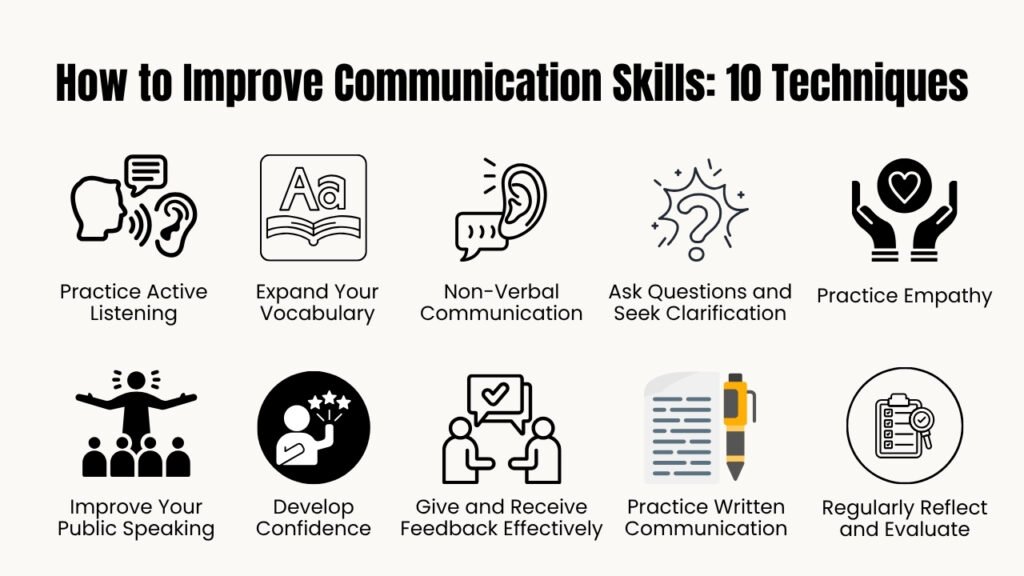
1. Practice Active Listening
Active listening is the foundation of effective communication. Focus fully on the speaker, giving them your undivided attention. Avoid interrupting or planning your response while they are talking. After they finish, summarize or paraphrase what was said to ensure you understood correctly.
Example/Exercise: During your next conversation, try repeating back in your own words what the other person said. Notice how it improves understanding and trust.
2. Expand Your Vocabulary and Use Clear Language
Using precise and simple words helps others understand your message without confusion. Avoid unnecessary jargon unless it’s appropriate for the audience. Gradually learn new words and practice using them in sentences to improve clarity.
Example/Exercise: Pick one new word each day and incorporate it into your conversations or writing. Over time, your communication will become more confident and articulate.
3. Pay Attention to Non-Verbal Communication
Non-verbal cues often speak louder than words. Maintain appropriate body language, eye contact, and gestures to reinforce your message. Be mindful of your facial expressions, posture, tone of voice, and speaking pace to ensure your message is consistent and engaging.
Example/Exercise: Record yourself during a short conversation or presentation. Observe your gestures, posture, and tone, and make small adjustments to appear more confident and approachable.
4. Ask Questions and Seek Clarification
Asking questions shows engagement and genuine interest in the conversation. It helps ensure you fully understand the other person’s perspective and reduces the risk of misunderstandings. By seeking clarification when needed, you also encourage deeper and more meaningful conversations.
Example/Exercise: During your next discussion, try asking at least two open-ended questions to better understand the other person’s thoughts. Notice how it promotes engagement and connection.
5. Practice Empathy in Conversations
Empathy is a powerful tool for improving communication. By understanding others’ perspectives, validating their emotions without judgment, and using reflective statements, you can build trust and foster stronger relationships.
Example/Exercise: When someone shares an experience, repeat back what they expressed in your own words and acknowledge their feelings. For example: “It sounds like you felt frustrated because…”
6. Improve Your Public Speaking Skills
Public speaking is a vital aspect of communication. Preparing key points in advance, practicing in front of a mirror or friends, and focusing on clarity, tone, and pauses can help you speak with confidence and authority.
Example/Exercise: Record a short speech or presentation. Pay attention to your tone, clarity, and pacing, then make small adjustments to improve delivery.
7. Develop Confidence Through Small Wins
Building communication confidence is a gradual process. Start with conversations in safe environments, gradually increase the complexity of interactions, and celebrate small successes along the way. Over time, these small wins will strengthen your overall communication skills.
Example/Exercise: Set a goal to initiate one meaningful conversation each day, starting with family or close friends, and slowly expand to colleagues or networking situations.
8. Give and Receive Feedback Effectively
Effective feedback is a two-way street. Use constructive language, avoid criticism that triggers defensiveness, and encourage open dialogue. Proper feedback improves understanding, performance, and relationships.
Example/Exercise: Practice giving feedback in the “sandwich method”: start with a positive point, provide a constructive suggestion, and end with encouragement. When receiving feedback, listen actively and ask clarifying questions before responding.
9. Practice Written Communication Skills
Effective communication isn’t limited to speaking—it extends to writing as well. Clear emails, messages, and documents make it easier for others to understand your ideas and intentions. Using headings, bullet points, and short paragraphs improves readability, while proofreading ensures clarity, correct tone, and professionalism.
Example/Exercise: Before sending an email or message, read it aloud to check for clarity and tone. Ensure your main points are easy to scan and understand. Over time, this practice will make your written communication more precise and effective.
10. Regularly Reflect and Evaluate Your Communication
Self-reflection and evaluation are crucial for long-term improvement. Identify patterns in your conversations, recognize areas where misunderstandings occur, and adjust your approach based on feedback. Seeking input from friends, mentors, or colleagues can provide valuable insights into your strengths and weaknesses.
Example/Exercise: Keep a communication journal to track interactions that went well and those that could be improved. Set aside time each week to review your entries and make small, actionable adjustments to your communication habits.
Tips to Make Communication Improvement a Habit
Improving communication skills is most effective when practiced consistently. By turning these strategies into daily habits, you can make lasting progress and see noticeable results over time.
- Set Realistic Goals
Start small by focusing on one technique at a time, such as practicing active listening for a week before moving on to improving body language. Setting achievable goals prevents overwhelm and ensures steady improvement. - Keep a Communication Journal
Document your interactions, noting what went well and where you faced challenges. Tracking your progress helps you identify patterns, measure improvement, and stay motivated. - Role-Play or Simulate Real-Life Scenarios
Practicing conversations, presentations, or difficult discussions in a safe environment can boost confidence. Role-playing allows you to experiment with new techniques and receive feedback without real-world consequences. - Join Groups, Clubs, or Online Communities for Practice
Engage with communities that encourage discussion and interaction, such as debate clubs, networking groups, or online forums. Regular practice with diverse audiences accelerates learning and helps you adapt to different communication styles.
By incorporating these tips into your routine, improving communication skills becomes a natural part of your daily life rather than a one-time effort.
Tools and Resources to Enhance Communication Skills
Enhancing your communication skills can be faster and more effective when you leverage the right tools and resources. Here are some practical options to support your learning journey:
- Books, Podcasts, and Online Courses
Reading books and listening to podcasts from communication experts provides valuable insights and strategies. Online courses, including video tutorials and interactive modules, allow you to practice at your own pace and learn from structured content.
Example Resources: “Crucial Conversations” by Kerry Patterson, podcasts like The Communication Guys, and platforms such as Coursera or Udemy for skill-based courses. - Public Speaking Apps and Platforms
Apps designed for public speaking practice help you improve clarity, tone, and confidence. Many platforms offer speech evaluation, virtual audiences, and timed exercises to simulate real-world scenarios.
Example Tools: Toastmasters International, Orai, or Ummo for tracking pacing and filler words. - Feedback and Tracking Tools
Regular feedback is essential for growth. Using tools to track your progress, such as communication journals or apps that record and analyze conversations, helps identify areas for improvement and monitor your development over time.
Example Tools: Grammarly for written communication, Voice Record Pro for verbal practice, or Google Docs for collaborative feedback.
By combining these tools with consistent practice and reflection, you can accelerate your progress and become a more confident, effective communicator in both personal and professional settings.
Conclusion
Improving communication skills is a powerful way to enhance both your personal and professional life. Clear expression, active listening, and empathy can strengthen relationships, reduce misunderstandings, and create new opportunities for growth.
Remember, transformation doesn’t happen overnight. Small, consistent efforts—practicing one technique at a time, reflecting on your interactions, and seeking feedback—can lead to significant and lasting improvements.
Start implementing the techniques outlined in this guide today. Whether it’s active listening, refining your body language, or practicing written communication, every step you take brings you closer to becoming a confident, effective communicator.
Frequently Asked Questions
1. How can I improve communication skills quickly?
You can start by practicing active listening, expanding your vocabulary, and focusing on clear, concise expression. Consistent daily practice of simple techniques often leads to noticeable improvements within a few weeks.
2. Why are communication skills important in personal life?
Strong communication skills help build meaningful relationships, reduce misunderstandings, and improve emotional intelligence, allowing you to connect more effectively with family, friends, and peers.
3. How can I improve communication skills for professional growth?
Effective communication enhances teamwork, leadership, client interactions, and career opportunities. Techniques such as public speaking practice, giving and receiving feedback, and clarity in written communication are particularly valuable in professional settings.
4. Can non-verbal communication really impact my interactions?
Yes. Body language, facial expressions, tone of voice, and gestures significantly influence how your message is received. Being aware of and aligning non-verbal cues with your words increases clarity and trust.
5. What tools or resources can help me improve communication skills?
Books, podcasts, online courses, public speaking apps, and feedback/tracking tools are excellent resources. Combining these with regular practice accelerates learning and skill development.