
Did you know the average person now spends over 7 hours a day in front of screens—whether on smartphones, laptops, or TVs? For many, that’s nearly half their waking life consumed by digital devices. While technology connects us and powers our work, the cost of this dependency is becoming harder to ignore.
Constant notifications, endless social media scrolling, and the pressure to stay “always available” are fueling a silent epidemic of digital overload. The result? Rising anxiety levels, difficulty focusing, sleep disruption, and burnout. Instead of being tools that empower us, our devices often control our attention and drain our energy.
But here’s the good news: you don’t need to give up technology to reclaim balance. By learning how to practice digital detox and mindful tech use, you can regain focus, reduce stress, and rebuild a healthier relationship with your devices. This guide will walk you step-by-step through practical strategies to help you reset your digital habits and improve your overall well-being.
Table of Contents
The Digital Dilemma: Why We Struggle with Tech Overuse
Technology is woven into every part of our lives—work, relationships, learning, and leisure. But the very tools designed to make life easier often end up consuming our attention and energy. Let’s break down why digital overuse has become such a widespread challenge.
The Rise of Screen Addiction
From answering work emails late at night to scrolling through social media before bed, many of us live in an “always-on” culture. Every ping, notification, or trending update keeps us hooked, creating addictive patterns similar to other behavioral dependencies. With smartphones constantly within reach, disconnecting feels almost impossible.
Mental Health Impact
Excessive screen time isn’t just a harmless habit—it carries real consequences for mental well-being. Studies link digital overuse to:
- Increased anxiety from constant connectivity and comparison on social platforms.
- Sleep disruption caused by blue light exposure and late-night device use.
- Attention fragmentation, where focus is constantly interrupted, making deep work or relaxation difficult.
Productivity Drain
Many people believe they are being productive while juggling multiple apps, chats, and tabs. In reality, multitasking is a myth. Each switch between tasks drains mental energy, leading to decision fatigue and reduced efficiency. Instead of achieving more, we end up exhausted, distracted, and unfulfilled.
The digital dilemma isn’t about technology itself—it’s about how we use it. Without intentional boundaries, screens can dominate our lives, impacting both mental health and productivity. That’s why learning to manage tech mindfully is no longer optional—it’s essential.
Signs You Need a Digital Detox
Not sure if you’re spending too much time on your devices? While technology is a valuable tool, there are clear warning signs that your screen time may be harming your mental health, focus, and productivity. If any of these sound familiar, it might be time to consider a digital detox.
1. Difficulty Concentrating Without Checking Your Phone
Do you find yourself reaching for your phone every few minutes—even during important tasks? This constant urge to “check in” is a classic sign of digital dependency. Over time, it trains your brain to seek constant stimulation, making it harder to concentrate deeply.
2. Feeling Anxious or Restless When Disconnected
If the thought of leaving your phone in another room makes you uneasy, or if you feel restless when Wi-Fi isn’t available, it could signal digital anxiety. This reliance on being “always connected” often leads to stress and reduced emotional resilience.
3. Reduced Sleep Quality from Late-Night Scrolling
Nighttime scrolling might feel harmless, but the blue light from screens disrupts melatonin production, making it harder to fall and stay asleep. Poor sleep quality directly impacts mood, energy levels, and mental clarity the next day.
4. Declining Productivity and Creativity
When constant notifications or endless feeds interrupt your workflow, it’s no surprise that productivity suffers. Even worse, the brain rarely gets the downtime it needs for creative thinking and problem-solving, leaving you feeling stuck or uninspired.
5. Increased Comparison, FOMO, or Emotional Exhaustion
Social media is designed to keep you engaged—but often at the cost of your emotional well-being. If you notice feelings of comparison, envy, or fear of missing out (FOMO) after scrolling, your digital habits may be draining more than just your time.
Recognizing these signs is the first step toward change. The good news? Even small adjustments in your digital habits can help you regain control, improve focus, and restore balance in your daily life.
The Science Behind Mindful Tech Use
To understand why digital detox and mindful technology practices are so effective, it helps to look at the science behind our relationship with screens. Technology doesn’t just shape our habits—it literally rewires how our brains process attention, stress, and reward.
Neurological Effects: Dopamine Loops and Habit Reinforcement
Every notification, like, or message triggers a small dopamine release, the brain’s “feel-good” neurotransmitter. This reward loop conditions us to check our devices more often, reinforcing the habit. Over time, these dopamine-driven cycles make it harder to resist checking phones, even without a real need. This is why scrolling can feel addictive—it’s the brain seeking another quick hit of reward.
Mental Health Connection: Stress and Anxiety
Excessive screen time isn’t just a matter of lost hours—it has a measurable impact on mental health. Studies link prolonged device use to:
- Increased stress from constant alerts and information overload.
- Heightened anxiety, fueled by social comparison and fear of missing out (FOMO).
- Reduced emotional regulation, as the brain becomes overstimulated and less capable of rest.
The more time we spend in front of screens, the harder it becomes to disconnect, creating a cycle of stress and distraction.
Mindful Use as a Solution: Awareness Over Abstinence
The good news is that technology itself isn’t the problem—it’s how we engage with it. Practicing mindful tech use means developing awareness of our habits instead of relying on willpower alone. Simple shifts—like asking “Why am I opening this app?” or setting intentional screen-free times—train the brain to pause before acting on impulse. Unlike extreme digital detoxes that require complete disconnection, mindful use promotes a balanced, sustainable relationship with technology.
By understanding the brain science behind digital habits, we can begin to replace mindless scrolling with purposeful and intentional use—restoring both focus and well-being.
Practical Strategies for a Digital Detox
A digital detox doesn’t have to mean abandoning technology altogether. The goal is to reset your relationship with screens so they support your well-being instead of draining it. Here are three practical strategies you can start using today.
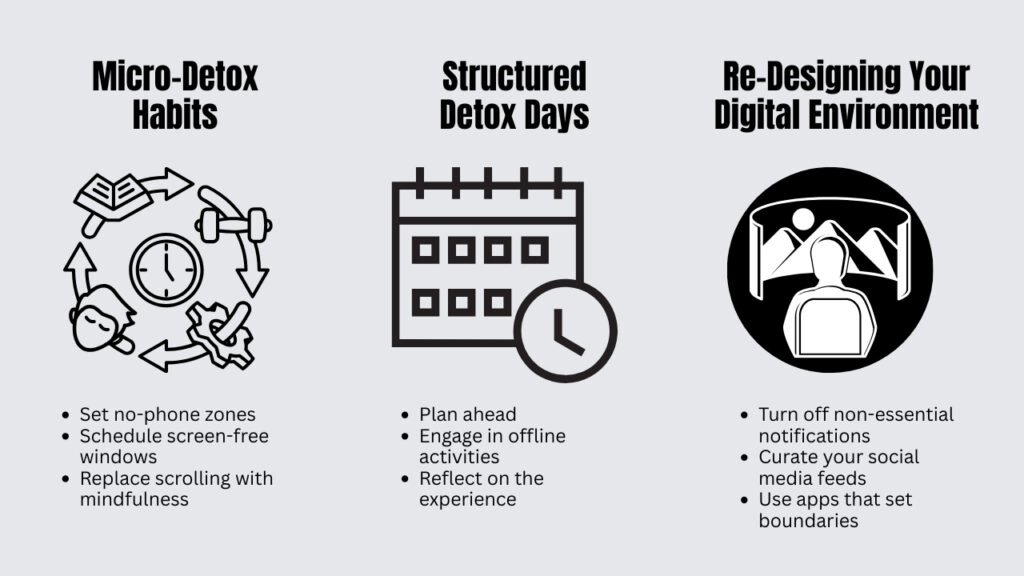
Start Small: Micro-Detox Habits
If the idea of stepping away from technology feels overwhelming, begin with small, sustainable changes:
- Set no-phone zones: Keep your bedroom, dining table, or morning routine free from devices to encourage presence and better sleep.
- Schedule screen-free windows: Block out 15–30 minutes each day where you intentionally disconnect, whether during a walk, coffee break, or family time.
- Replace scrolling with mindfulness: Instead of reaching for your phone, try a short breathing exercise, stretch, or journaling session to reset your mind.
These micro-detox habits help you regain control without disrupting your daily life.
Structured Detox Days or Weekends
Sometimes, a deeper reset is needed. Structured digital detox periods give your brain space to recharge.
- Plan ahead: Choose a day or weekend where you don’t need to be constantly online for work. Let colleagues or loved ones know so expectations are clear.
- Engage in offline activities: Use the freed-up time for activities that nourish your mind and body, such as reading, walking outdoors, cooking, or journaling.
- Reflect on the experience: Notice how your energy, focus, and mood shift when you spend extended time away from screens.
Even one tech-light day per month can dramatically reduce stress and restore balance.
Re-Designing Your Digital Environment
Often, it’s not just about reducing time online—it’s about creating an environment where technology serves you, not the other way around.
- Turn off non-essential notifications: Eliminate constant interruptions by silencing unnecessary pings and alerts.
- Curate your social media feeds: Unfollow accounts that trigger comparison, mute negative content, and prioritize pages that inspire or educate.
- Use apps that set boundaries: Instead of platforms designed to keep you hooked, try tools that track and limit screen time, nudging you toward healthier habits.
By intentionally re-designing your digital environment, you reduce temptation and make mindful tech use your default.
A digital detox isn’t about rejecting technology—it’s about learning to use it with intention and balance. Whether you start with small daily changes or commit to structured detox days, these strategies can help you regain focus, reduce anxiety, and improve overall well-being.
Building a Mindful Relationship with Technology
A digital detox can help reset your habits, but lasting change comes from cultivating a mindful relationship with technology. Instead of letting screens control your time and attention, you can choose how, when, and why you use them. Here’s how to make that shift.
Intentional Usage: Pause Before You Tap
Mindful tech use begins with awareness. Each time you reach for your device, ask yourself:
- “Why am I opening this app?”
- “Is this action intentional or just a reflex?”
By pausing to reflect, you break the cycle of mindless scrolling and ensure your screen time serves a clear purpose—whether it’s learning, connecting, or completing a task.
Digital Mindful Rituals: Start and End Your Day with Clarity
How you begin and end your day sets the tone for your mental health. Simple digital mindful rituals can help:
- Morning journaling or meditation before checking your phone.
- Tech-free evenings with reading, stretching, or gratitude journaling instead of late-night scrolling.
- Scheduled check-ins for email or social media instead of constant monitoring.
These rituals create healthy boundaries while improving focus, sleep, and emotional well-being.
Balancing Online vs. Offline Life
The healthiest digital habits involve balance. While technology is essential, your offline life should remain the anchor. To strengthen this balance:
- Cultivate real-world hobbies like cooking, painting, or gardening.
- Invest in face-to-face connections, whether through family dinners, coffee with friends, or community events.
- Prioritize nature time—even short walks outdoors can counter digital fatigue and boost mental clarity.
When your offline world is rich and fulfilling, the pull of constant online engagement naturally decreases.
Mindful tech use isn’t about rigid rules—it’s about creating space to live with intention. By practicing awareness, establishing digital rituals, and strengthening offline connections, you build a sustainable and positive relationship with technology.
Overcoming Common Challenges
Adopting mindful tech habits and practicing digital detox isn’t always easy. Many people start with good intentions but quickly slip back into old routines. The key is to recognize the common barriers and equip yourself with strategies to overcome them.
Fear of Missing Out (FOMO)
FOMO is one of the strongest drivers of digital overuse. Social media thrives on showing curated highlights, making you feel like you’re falling behind. The solution is to reframe your mindset: remind yourself that you’re not missing out—you’re gaining time for focus, rest, and meaningful activities. Try scheduling specific times to check updates instead of scrolling aimlessly.
Work Demands That Require Online Presence
For many professionals, being online is part of the job. The challenge lies in separating work-related screen time from personal distraction. Set clear boundaries by:
- Creating fixed “online availability” hours.
- Using productivity tools that block social media during work sessions.
- Logging off work apps after hours to protect personal time.
This ensures that technology supports your career without overwhelming your mental health.
Social Pressure to Stay Constantly Connected
Friends, family, and colleagues may expect instant replies, making it hard to disconnect. The key is communicating boundaries clearly. Let others know when you’re unavailable and reassure them you’ll respond at a set time. Over time, people will respect your limits—and you’ll reduce the pressure to be “always on.”
How to Find Accountability
Lasting change becomes easier with support. Joining peer challenges, group detox programs, or online communities can keep you motivated. Even simple steps, like telling a friend about your digital detox goals, add accountability. Shared progress and encouragement can transform your commitment into a sustainable lifestyle.
Long-Term Integration: Turning Detox into Lifestyle
A digital detox is a great starting point, but the real transformation comes when mindful tech practices become part of your everyday lifestyle. Sustainable change requires consistency, intentionality, and regular reflection.

Moving from Detox to Mindful Tech Habits
The goal is not to eliminate technology but to use it intentionally. After completing a detox, integrate small, practical habits into your daily routine:
- Check social media or emails at set times rather than continuously.
- Replace passive scrolling with meaningful engagement, like educational content or creative work.
- Use devices as tools to enhance life, not as default time-fillers.
Establishing Sustainable Routines for Balance
Consistency is key. Create routines that naturally incorporate mindful tech use:
- Morning rituals without screens to start your day focused.
- Evening wind-down periods to improve sleep quality.
- Scheduled breaks during work to refresh without reaching for your phone.
These routines make it easier to maintain focus, reduce anxiety, and protect mental energy over the long term.
Encouraging Self-Awareness Check-Ins
Regular reflection helps you stay mindful of your habits:
- Weekly check-ins to review screen time and productivity.
- Journaling or tracking how you feel after using certain apps.
- Adjusting habits when you notice signs of digital overload returning.
By staying self-aware, you can catch unhealthy patterns early and recalibrate before they affect your mental well-being.
Integrating mindful tech use into your lifestyle transforms short-term detoxes into long-lasting balance, focus, and mental clarity. Over time, technology becomes a supportive tool rather than a source of stress.
Conclusion
Mindful technology use isn’t about abandoning your devices—it’s about regaining control over how and when you engage with them. By taking intentional steps to manage screen time, you can reduce stress, boost focus, and create a healthier balance between your digital and offline life.
Start small: choose one micro-detox habit today—like a no-phone zone at the dining table, a 15-minute screen-free break, or a mindful morning ritual. Small changes compound over time, creating lasting improvements in your well-being.
We’d love to hear from you! Share your digital detox experiences or mindful tech tips in the comments below and join the conversation on building healthier tech habits.
Frequently Asked Questions
1. What is a digital detox, and why is it important?
A digital detox is a period of intentional disconnection from digital devices to reduce stress, improve focus, and restore mental well-being. It helps break addictive habits and encourages mindful technology use.
2. How can I start a digital detox without disrupting my work or social life?
Begin with small steps like setting screen-free zones, scheduling short “tech-free” windows, or using apps that limit screen time. Communicate boundaries with colleagues and friends to maintain balance.
3. What are the signs I need a digital detox?
Common signs include difficulty concentrating without your phone, anxiety when disconnected, reduced sleep quality, declining productivity, and feelings of FOMO or emotional exhaustion.
4. Can a digital detox improve mental health and productivity?
Yes. By reducing distractions and information overload, digital detoxes help lower anxiety, enhance focus, improve sleep, and boost creativity, leading to better overall productivity and well-being.
5. How do I maintain mindful tech habits after a digital detox?
Incorporate sustainable routines like intentional app use, morning journaling, offline hobbies, and regular self-awareness check-ins. Consistency and reflection help turn temporary detoxes into long-term lifestyle improvements.