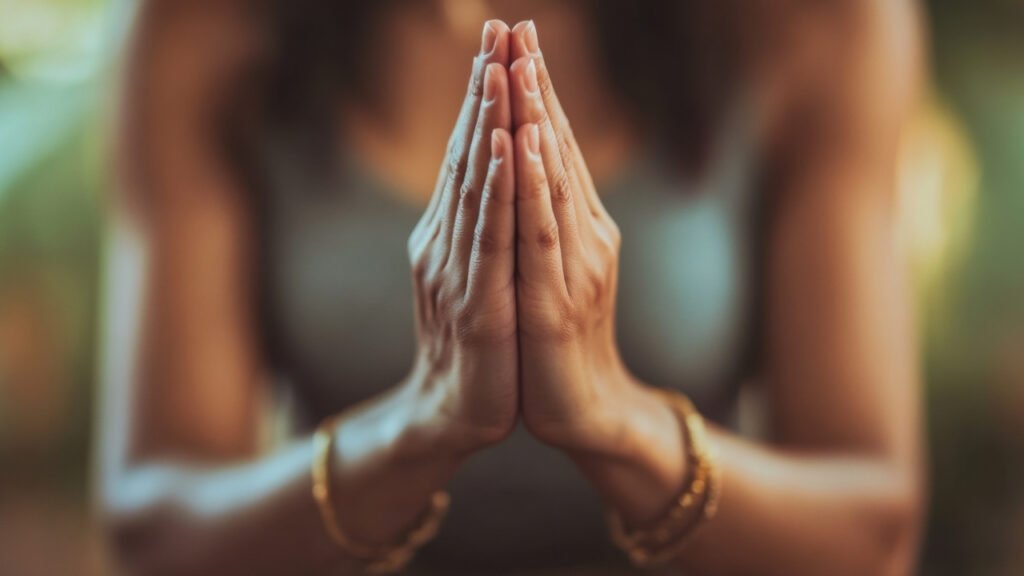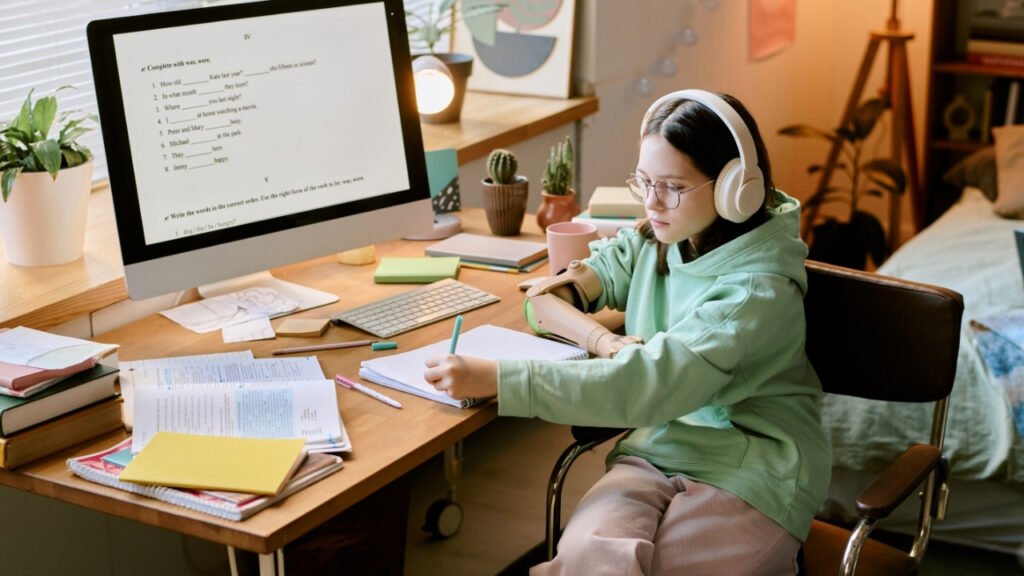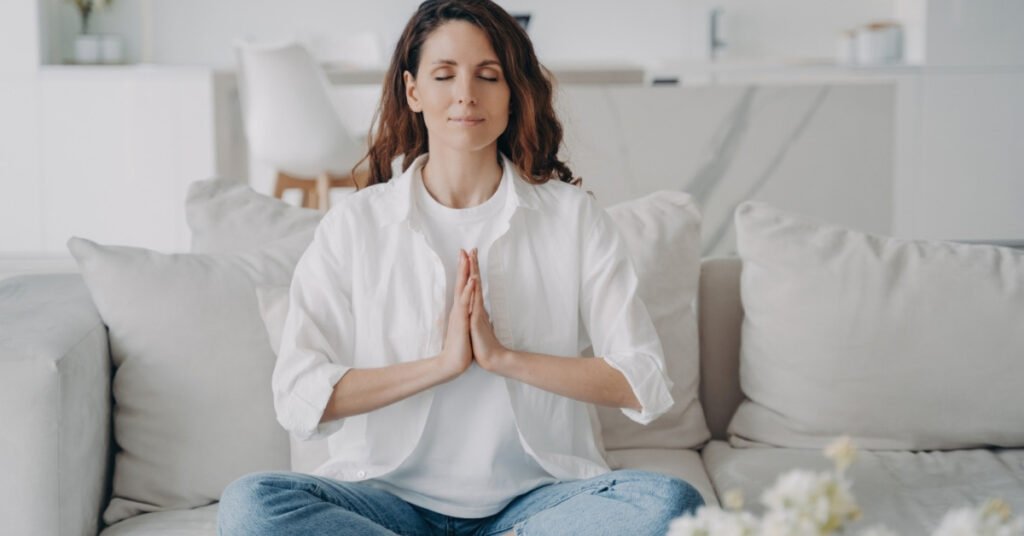
Feeling overwhelmed has become normal for most of us. School pressure, work stress, family expectations, constant notifications — it all builds up. Even when we try to relax, our mind keeps spinning.
Some days it feels like your brain is open in too many tabs. You want to focus, but your chest feels tight. You want to sleep, but your thoughts keep jumping around. Or you scroll on your phone for a quick break, and suddenly half an hour disappears.
This is exactly why breathing exercises matter. They’re simple, fast, and anyone can do them. No equipment, no experience, no perfect environment. Just you and your breath. A small change in how you breathe can calm your mind, relax your body, and give you a sense of control again.
In this blog, we’ll break down what breathing exercises actually are in the simplest way possible. You’ll learn why they work, without complicated science. And you’ll get easy steps you can follow today to feel more grounded and clear-headed.
If you’ve been searching for something that actually helps in real life and not just in theory, you’re in the right place. Let’s make this simple, practical, and worth your time.
Table of Contents
What Are Breathing Exercises?
Breathing exercises are simple techniques that help you use your breath in a more intentional way. You’re basically teaching your body how to slow down, relax, and reset by changing how you inhale and exhale. Think of it as giving your mind a quick break without needing anything except your lungs.
Breathing exercises are not complicated. They are not something only yoga experts do. They are not tied to any belief or spiritual practice unless someone personally chooses that path. They are simply easy ways to help your mind and body work better together.
Why Breathing Matters More Than We Realize
We breathe all day without thinking, so it’s easy to forget how powerful it actually is. The way we breathe affects how we feel. When we breathe fast, our heart speeds up, our mind races, and we feel stressed. When we breathe slowly and deeply, our body relaxes, our thoughts slow down, and we feel calmer.
A simple example:
Think about the last time you felt nervous before a test or a meeting. Your breathing probably became short and quick. And when someone said take a deep breath, you instantly felt a little more stable. That tiny change happens because breathing directly affects your brain and body.
Without going into heavy science, here’s the simple idea:
Your body needs the right balance of oxygen and carbon dioxide. When you breathe too fast or too shallow, this balance gets disturbed, and your body feels stressed. When you slow down your breath, that balance resets, and you feel better almost instantly.
This is one of the biggest benefits of breathing exercises: they help you calm down, focus better, and reduce stress without needing any tools or long routines.
Common Types of Breathing Exercises
Here are a few simple breathing exercises that most beginners start with. They’re easy, safe, and work for almost everyone.
Slow Breathing
You breathe in gently and breathe out slowly. It helps reduce stress quickly.
Deep Belly Breathing
You breathe into your belly instead of your chest. It relaxes your body and helps you feel grounded.
Box Breathing
You breathe in, hold, exhale, and hold again for equal counts. It’s great for focus and calming your mind during pressure moments.
Paced Breathing
You breathe in for a certain count and breathe out for a longer count. It helps your body switch from stress mode to calm mode.
You don’t need to master all of these. Even one technique can make a big difference. The goal is not perfection. The goal is to help your mind feel lighter and your body feel more relaxed.
Why Breathing Exercises Work
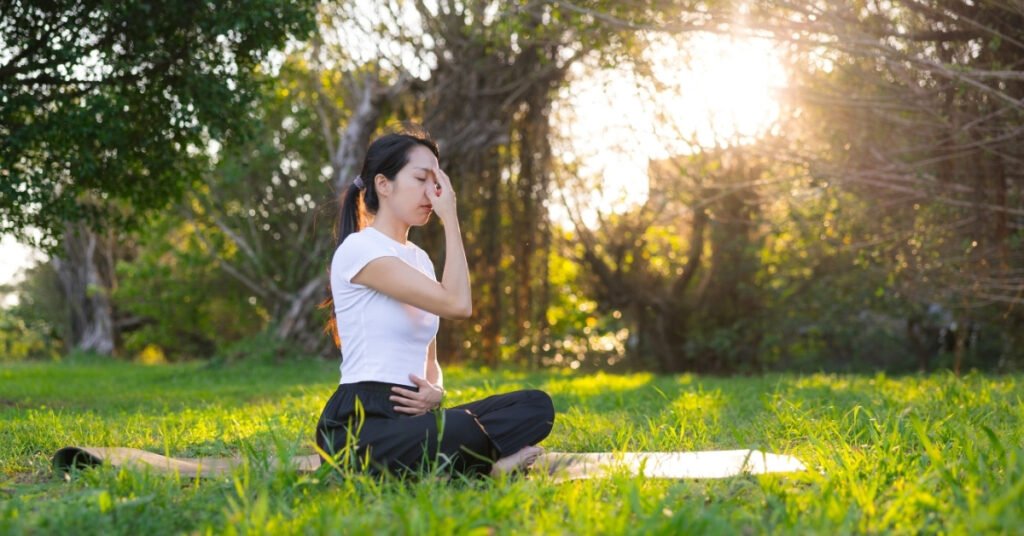
How Breathing Affects the Brain
Your brain has two main “modes.” One helps you stay calm and steady, and the other reacts to stress, pressure, and danger. When life gets overwhelming, the stress side kicks in fast. That’s why your mind races, your chest feels tight, and everything suddenly feels heavier.
When you slow your breathing, something interesting happens. Your brain receives a signal that says things are safe. It begins to shift from stress mode to calm mode. Your thoughts slow down, your emotions feel lighter, and your mind becomes clearer.
Research shows that slow breathing can reduce activity in the stress center of the brain within a few minutes. You don’t need complex science to understand it. When your breath slows down, your brain slows down with it.
How Breathing Affects the Body
Your breath and your body are deeply connected. When you’re stressed or anxious, your breathing becomes short and fast. This raises your heart rate, tightens your muscles, and makes your body feel tense.
But when you slow your breath, everything starts to settle. Your heart rate drops. Your muscles loosen. Your body gets the right amount of oxygen. This shift activates what we can call the rest-and-calm response, a natural reset button built into your body.
This is why many beginners feel relief within a minute or two of deep, slow breathing. It doesn’t take long. Your body is designed to respond to your breath quickly.
Daily Life Scenarios Where Breathing Helps
Breathing exercises are not just for meditation or quiet moments. They help in real, everyday situations where your mind feels crowded or your emotions feel heavy.
Feeling overwhelmed
A few slow breaths can help you feel less flooded and more in control.
Overthinking
When your thoughts keep looping, steady breathing helps break the cycle.
Difficulty focusing
A simple breathing reset improves alertness and clears mental fog.
Stressful conversations
Taking a calm breath before speaking helps you respond better instead of reacting emotionally.
Before sleep
Slow breathing helps your mind unwind and your body relax, making it easier to fall asleep.
Breathing works because it connects your mind and body in the simplest way possible. You don’t need hours of practice. You don’t need perfect silence. You just need a few moments and your breath. It’s one of the fastest tools to bring yourself back to calm, no matter where you are.
The Real Benefits of Breathing Exercises
Mental Health Benefits
Breathing exercises have a direct impact on how you feel emotionally. When you slow down your breath, your stress levels drop because your brain stops sending danger signals to your body. This simple shift helps you handle pressure better.
Slower breathing also lowers anxiety. It gives you a moment of space before your worries take over. Many people feel calmer within minutes, even during tough moments.
Another big benefit is emotional balance. When your breath is steady, your mind becomes clearer and more stable. You respond instead of reacting, which makes daily life feel a lot easier.
Physical Benefits
Breathing exercises improve oxygen flow in your body. When your breath is deep and slow, your lungs work better, and your cells get the oxygen they need to function well.
Your heart also benefits. Slow breathing helps your heartbeat become more steady, which is linked to better heart health over time.
Your muscles relax too. Stress makes your shoulders, neck, and jaw feel tight. A few gentle breaths can release that tension quickly, giving your body a break from constant pressure.
Productivity and Focus Benefits
Breathing exercises are not just for relaxation. They also help you think better. When your breath is slow and steady, it becomes easier to concentrate without feeling mentally exhausted.
Your decision-making improves because you’re not acting from a stressed or rushed state. You feel more grounded and clear, which helps whether you’re studying, working, or handling daily tasks.
Many people also notice sharper clarity. It’s like your mind gets a quick reset, making it easier to stay present and avoid distractions.
Simple Breathing Exercises Anyone Can Start Today
This is where things get practical. You don’t need equipment, a quiet room, or any experience. These exercises are simple enough for beginners and effective enough for anyone who wants quick relief from stress, anxiety, or mental fog.
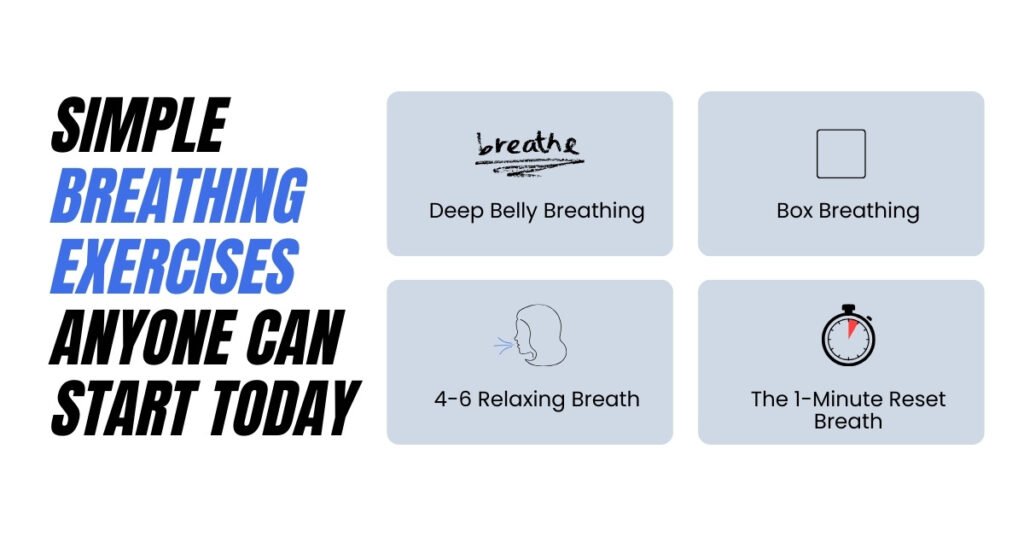
1. Deep Belly Breathing (Diaphragmatic Breathing)
What it is
Deep belly breathing is a way of breathing that fills your belly instead of your chest. It helps you breathe more fully and gives your body the oxygen it actually needs.
Why it helps
This type of breathing relaxes your nervous system. It slows your heart rate, reduces tension, and helps you feel grounded. It is one of the most recommended breathing exercises because it works for almost everyone.
Step-by-step instructions
- Sit or lie down comfortably.
- Place one hand on your chest and the other on your belly.
- Breathe in through your nose and let your belly rise.
- Keep your chest as still as possible.
- Slowly breathe out through your mouth.
- Repeat for 5 to 10 breaths.
How beginners can use it daily
Use this in the morning to start calm, during study breaks, before sleep, or anytime your mind feels heavy. Even one minute can make a difference.
2. Box Breathing (Great for Focus and Calm)
What it is
Box breathing is a simple pattern where you breathe in, hold, breathe out, and hold again for equal counts. It creates a steady rhythm that helps you stay calm and focused.
Why it works
This balanced pattern sends a clear signal to your brain to slow down. It reduces stress, increases concentration, and brings your mind back to the present moment.
Step-by-step
- Breathe in for 4 seconds.
- Hold your breath for 4 seconds.
- Breathe out for 4 seconds.
- Hold again for 4 seconds.
- Repeat the cycle for 4 to 6 rounds.
When to use it
This is perfect for work stress, exam pressure, tough conversations, or moments where you need quick mental clarity.
3. 4-6 Relaxing Breath
How extending the exhale calms the body
When your exhale is longer than your inhale, your body naturally relaxes. It turns off the stress response and activates the calm response. This is why the 4-6 pattern works so well.
Step-by-step
- Breathe in through your nose for 4 seconds.
- Breathe out slowly for 6 seconds.
- Continue for 1 to 3 minutes.
Ideal for anxiety and sleep
This is one of the easiest ways to settle your mind at night. It also helps during moments of anxiety or when your chest feels tight.
4. The 1-Minute Reset Breath (Fast Relief for Stress)
What it is
This is a quick breathing technique you can use anytime, anywhere. It’s simple, fast, and designed for moments when you feel overwhelmed.
Why it’s helpful
It gives your mind a clean break from stress. Even a short reset can help you think clearly again.
Step-by-step
- Breathe in slowly for 3 seconds.
- Hold for 1 second.
- Breathe out gently for 5 seconds.
- Repeat for one full minute.
This small technique is powerful because it doesn’t require a long routine. It’s perfect for beginners and works well during busy days, emotional moments, or stressful situations.
These exercises are easy, quick, and beginner friendly. You don’t need to master all of them. Even one practiced consistently can make your day calmer and your mind clearer.
Final Thoughts
Breathing is one of the simplest tools we have, yet most of us forget to use it. You don’t need to be an expert. You don’t need perfect posture or a quiet room. You just need a few moments and the willingness to slow down. That alone can make your day feel lighter and your mind feel clearer.
Start small and be consistent. Even one minute a day can create real change. You don’t have to follow every exercise in this guide. Pick one that feels easy and stick with it. Over time, these tiny moments of calm start to add up.
Taking care of your mental and physical well-being doesn’t always require big steps. Sometimes it’s as simple as paying attention to your breath and giving yourself a short pause when life gets too noisy.
If I could share one thing I wish I learned earlier, it would be this: your breath is always there for you. No matter where you are or what you’re facing, you can use it to steady yourself. It’s a quiet anchor you can return to anytime.
Frequently Asked Questions
What are breathing exercises and why are they helpful?
Breathing exercises are simple techniques that help you slow down your breath to calm your mind and body. They reduce stress, improve focus, and help you feel more balanced.
How long should I practice breathing exercises each day?
Even one to two minutes is enough for beginners. With time, you can increase it to five or ten minutes, but consistency matters more than duration.
Can breathing exercises really reduce anxiety?
Yes. Slow, controlled breathing activates your body’s natural calming response. Many people feel relief within a few minutes, especially during anxious moments.
Is it normal to feel lightheaded when trying breathing exercises?
It can happen if you breathe too quickly or too deeply at first. Slow down the pace, take gentle breaths, and stop if you feel uncomfortable.
Do I need special tools or a quiet place to practice?
No. You can practice breathing exercises anywhere — at your desk, in your bed, during a break, or even while walking. Your breath is always with you, so it’s always accessible.