
Do you ever feel like no matter how hard you try, you keep repeating the same habits, thinking the same thoughts, and making the same mistakes? You’re not alone. Many people struggle with feeling trapped in patterns that no longer serve them, even when they genuinely want change. This constant cycle can leave you frustrated, overwhelmed, and questioning your ability to grow.
Dr. Joe Dispenza, a leading expert in neuroscience and personal transformation, explains that most of us live from a predictable set of thoughts, emotions, and behaviors that are hardwired into our brains. These automatic patterns create a “default self” that keeps us stuck, even when we consciously desire improvement. The good news? Neuroplasticity—the brain’s ability to reorganize itself—allows us to break old habits and consciously create a new version of ourselves.
In this article, we’ll guide you step by step through the process of breaking the habit of being yourself. You’ll discover actionable techniques to rewire your mindset, overcome limiting behaviors, and create lasting personal transformation. By the end, you’ll have a clear roadmap to replace old patterns with empowering habits that truly reflect the person you want to become.
Table of Contents
Understanding Why Change Feels Impossible
Changing deeply ingrained habits often feels like an uphill battle. You may have tried countless times to improve yourself, only to find yourself slipping back into old patterns. Understanding why change feels impossible is the first step toward true personal transformation. Let’s break it down.
The Science of Habit Formation
Our brains are wired to conserve energy, which means they rely on automatic behaviors—habits—to make life more manageable. These habits form through repeated thoughts, actions, and emotional responses, creating strong neural pathways. Over time, these pathways become the default routes for your behavior, which is why breaking habits can feel so difficult.
- How the brain creates automatic behaviors: Repetition strengthens the connection between neurons, turning conscious actions into unconscious routines.
- Role of neural pathways in reinforcing habits: Every time you repeat a habit, the neural pathway becomes stronger, making the behavior more automatic and harder to change.
This is where the concept of neuroplasticity and habit change comes into play. While habits are deeply embedded, your brain has the ability to rewire itself, allowing you to replace old patterns with new, empowering behaviors.
Emotional and Environmental Triggers
Many habits are triggered by emotions or environmental cues, often without conscious awareness. Identifying these triggers is essential to breaking the cycle.
- Identifying triggers that keep you in old patterns: Emotional stress, boredom, or even certain social settings can unconsciously prompt old behaviors.
- Examples of common triggers in daily life: Checking your phone when anxious, snacking when stressed, or procrastinating in response to fear of failure.
By recognizing these triggers, you can create strategies to interrupt the automatic response and choose a healthier action instead.
The Mind-Body Connection
Your thoughts and emotions are closely linked to your behaviors. Negative thinking or unresolved emotional patterns can keep you locked in old habits. Awareness of this mind-body connection is critical for real change.
- How thoughts influence emotions and behaviors: Persistent negative thoughts can create emotional patterns that drive habitual actions, reinforcing the cycle.
- Importance of awareness in personal change: Becoming aware of your thoughts, feelings, and reactions is the first step to consciously rewiring your behavior and embracing new habits.
Understanding these mechanisms helps explain why breaking habits is hard. With the right techniques and consistent practice, however, you can harness neuroplasticity to reshape your mind and create lasting transformation.
Preparing for Personal Transformation
Before you can successfully break the habit of being yourself, it’s essential to lay the groundwork for lasting change. Personal transformation doesn’t happen by accident—it requires intention, self-awareness, and a supportive environment. This section provides practical steps to prepare for your journey.
Setting Clear Intentions
Clarity is the cornerstone of change. When you know exactly what you want to achieve, your brain can focus on creating the necessary pathways to support those changes.
- How clarity of purpose drives behavior change: Clear intentions give your subconscious mind a roadmap, making it easier to recognize opportunities and actions aligned with your goals. Without clarity, efforts can feel scattered and progress slow.
- Techniques for defining meaningful goals:
- Write SMART goals (Specific, Measurable, Achievable, Relevant, Time-bound)
- Visualize the person you want to become and the habits you want to adopt
- Break larger goals into small, actionable steps
By setting clear intentions, you create a strong foundation for personal transformation.
Assessing Current Patterns
Self-awareness is crucial to identifying which habits are helping you grow and which are holding you back.
- Journaling to track thoughts, emotions, and actions: Spend a few minutes daily noting your reactions, decisions, and recurring patterns. Over time, this creates a clear picture of your current behavioral landscape.
- Recognizing habits that no longer serve you: Look for patterns that lead to stress, procrastination, or negative outcomes. Once identified, these are the habits you need to focus on changing.
This step helps you identify habits to change, ensuring your transformation is targeted and effective.
Creating a Supportive Environment
Your surroundings and social support play a significant role in sustaining new habits.
- Adjusting surroundings to encourage new behaviors: Remove temptations and distractions that reinforce old habits. Incorporate cues that remind you to practice new behaviors, like leaving motivational notes or placing tools for new habits within easy reach.
- Seeking accountability through mentors or peers: Share your goals with trusted individuals who can provide encouragement, feedback, and support. Accountability dramatically increases the likelihood of sticking to new behaviors.
By intentionally shaping your environment and social support, you set yourself up for consistent progress and long-term success.
Step-by-Step Guide to Breaking Old Habits
Breaking long-standing habits requires a systematic approach. By following a clear, actionable plan, you can rewire your brain, replace negative patterns, and create lasting personal transformation. Below is a practical step-by-step guide to breaking habits that you can start applying today.
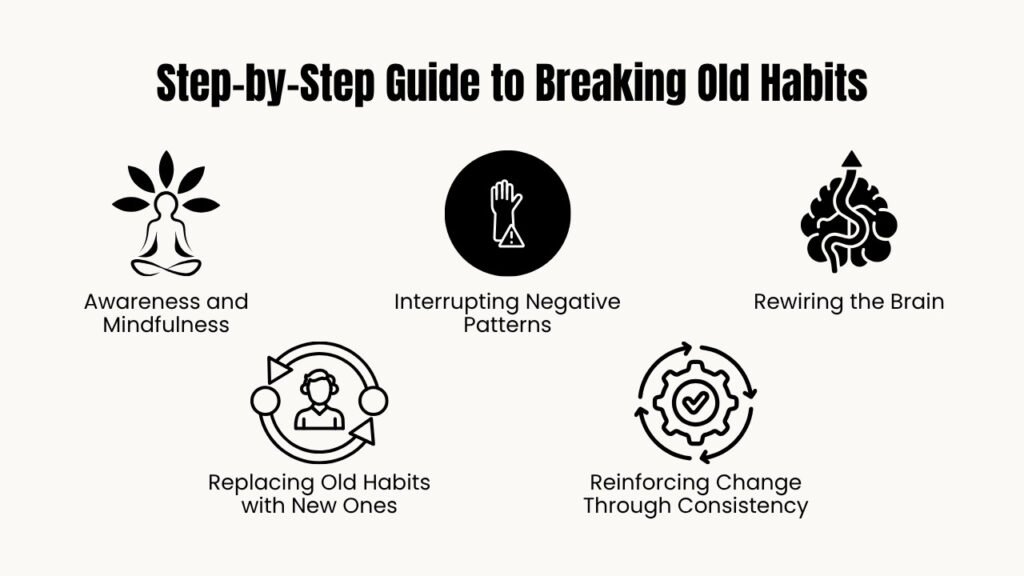
Step 1: Awareness and Mindfulness
Awareness is the first step toward change. You cannot change what you are not conscious of.
- Practicing meditation or mindful observation: Set aside a few minutes daily to sit quietly, focusing on your breath or observing your thoughts without judgment. This strengthens your ability to notice patterns before reacting automatically.
- Noticing triggers and automatic reactions: Pay attention to situations, people, or emotions that prompt old habits. Journaling your observations can reveal hidden patterns and provide insights into behaviors you want to change.
Mindfulness helps you recognize the gaps between your impulses and your conscious choices, giving you control over your actions.
Step 2: Interrupting Negative Patterns
Once you identify your habitual triggers, it’s time to interrupt them.
- Techniques to pause before reacting: When a trigger arises, take a deep breath, count to ten, or step away briefly to prevent automatic reactions.
- Simple exercises to reframe thoughts: Replace self-critical or negative thoughts with positive affirmations or constructive alternatives. This rewiring of thought patterns reduces the likelihood of falling back into old habits.
Interrupting negative patterns is a critical part of habit transformation techniques, as it prevents reinforcement of undesired behaviors.
Step 3: Rewiring the Brain
Neuroplasticity allows your brain to create new neural pathways, enabling long-term change.
- Introduction to neuroplasticity principles: Your brain’s structure and function are not fixed. Repeating new thoughts, emotions, and behaviors strengthens new pathways, while old, unused pathways weaken over time.
- Using visualization and mental rehearsal: Imagine yourself performing new, desired behaviors in detail. Mental rehearsal primes your brain to act in ways aligned with your goals, making real-world execution easier and more natural.
Rewiring the brain ensures that your transformation is not temporary but deeply ingrained at a neurological level.
Step 4: Replacing Old Habits with New Ones
Simply stopping a habit is rarely enough—you must replace it with a positive alternative.
- Identifying replacement behaviors: Choose healthy, constructive actions that fulfill the same need as the old habit. For example, replace stress eating with deep breathing or a short walk.
- Gradual integration into daily routines: Introduce new habits in small, manageable steps. Consistent repetition over time solidifies the behavior, making it automatic.
This method allows your mind to adapt without resistance, making change smoother and more sustainable.
Step 5: Reinforcing Change Through Consistency
Consistency is the key to making new habits permanent.
- Tracking progress with daily rituals: Use a journal, app (Notion), or checklist to monitor your new behaviors. Celebrating small wins reinforces positive change.
- Reward systems and self-acknowledgment: Acknowledge your effort and progress regularly. Positive reinforcement strengthens motivation and commitment to your new habits.
By reinforcing change consistently, you ensure your personal transformation becomes lasting and meaningful.
Overcoming Challenges and Setbacks
Even with a clear plan, breaking old habits and transforming your mindset is not always smooth. Setbacks are normal, but understanding common obstacles and strategies to overcome them can keep you moving forward.
Common Obstacles in Personal Transformation
Recognizing what can derail your progress is the first step in staying on track.
- Emotional resistance: Change often triggers fear, anxiety, or self-doubt. Your brain may resist leaving familiar patterns, even if they are harmful.
- Environmental distractions: Your surroundings can either support or sabotage your progress. Clutter, stress, or unsupportive people can make it harder to maintain focus.
- Self-sabotaging beliefs: Negative self-talk, limiting beliefs, or perfectionism can prevent consistent effort, making old habits easier to fall back into.
Understanding these obstacles is key to learning how to overcome habit change challenges effectively.
Strategies to Stay on Track
Consistency and resilience are vital for maintaining personal growth.
- Resilience-building exercises: Practices like journaling, mindfulness, and controlled exposure to discomfort help strengthen your emotional and mental resilience.
- Mindset techniques to combat setbacks: Reframe failures as learning opportunities, practice positive affirmations, and focus on incremental progress rather than perfection.
By integrating these strategies, you can navigate challenges with confidence and maintain momentum in your personal transformation journey.
When to Seek Professional Help
Sometimes, guidance from experts can accelerate progress and provide support when self-directed efforts are not enough.
- Coaches, therapists, or support groups: Professionals can help identify deep-seated patterns, provide accountability, and teach advanced habit transformation techniques tailored to your needs.
Knowing when to seek help ensures you continue maintaining personal growth without unnecessary frustration or prolonged setbacks.
Maintaining Transformation Long-Term
Achieving personal transformation is just the beginning. To ensure that your new habits and mindset become permanent, you need consistent practices and a strategic approach. Maintaining transformation long-term requires daily commitment, self-awareness, and a growth-oriented identity.

Daily Practices to Sustain Change
Consistency is the cornerstone of lasting change. Incorporating simple, daily practices reinforces your new behaviors and strengthens your mindset.
- Meditation, journaling, and reflection: Regular meditation enhances focus and mindfulness, journaling tracks progress and uncovers patterns, and reflection allows you to evaluate what’s working and what needs adjustment.
- Continuous self-assessment and adjustment: Review your actions, thoughts, and habits daily or weekly to identify areas for improvement. Adapt strategies to maintain momentum and prevent relapse into old patterns.
These daily habits form the foundation for maintaining personal transformation and ensuring that changes are not temporary.
Measuring Personal Growth
Tracking progress keeps motivation high and helps you stay accountable to yourself.
- Tracking improvements in mindset, productivity, and emotions: Use metrics or journals to monitor changes in thought patterns, emotional responses, and daily performance. Seeing measurable progress reinforces commitment to new behaviors.
Measuring personal growth helps you stay focused on long-term goals and recognize the tangible impact of your efforts.
Embracing a Growth-Oriented Identity
True transformation occurs when your identity aligns with the person you aspire to become.
- How identity shift ensures lasting transformation: Instead of just trying to change behaviors, adopt the mindset and self-concept of someone who naturally practices these positive habits. This identity-based approach reduces resistance and solidifies long-term change.
By fully embracing a growth-oriented identity, you make your new habits automatic and sustainable, ensuring that personal transformation lasts a lifetime.
Conclusion
Breaking the habit of being yourself is not an overnight process, but with the right approach, it is entirely achievable. In this guide, we covered the essential steps to personal transformation: developing awareness and mindfulness, interrupting negative patterns, rewiring your brain, replacing old habits with new ones, and reinforcing change through consistency. We also explored how to overcome challenges, maintain progress, and embrace a growth-oriented identity for long-term success.
The key takeaway is that persistence, self-awareness, and intentional action are critical for real change. Transformation requires patience, but every small step you take reinforces your new habits and brings you closer to the person you want to become.
Now is the time to act. Start implementing the steps outlined in this guide today, track your progress, and adjust as needed. By doing so, you are taking meaningful steps toward lasting personal growth and empowerment.
If you’ve ever wondered how to break the habit of being yourself, this guide gives you a clear, actionable roadmap to transform your mindset, replace limiting behaviors, and achieve meaningful personal transformation.
Frequently Asked Questions
1. What does “breaking the habit of being yourself” mean?
Breaking the habit of being yourself refers to identifying and changing automatic thoughts, emotions, and behaviors that no longer serve you, allowing you to consciously create a new mindset and lifestyle.
2. How long does it take to break old habits and transform your mindset?
The timeline varies for each individual, but consistent daily practice, awareness, and reinforcement of new habits typically show noticeable change within a few weeks to a few months.
3. What techniques can help me rewire my brain for personal transformation?
Techniques such as meditation, mindfulness, visualization, mental rehearsal, journaling, and conscious habit replacement are scientifically proven methods to support neuroplasticity and habit change.
4. How can I stay motivated when facing setbacks during personal transformation?
To stay motivated, practice self-compassion, track your progress, reframe failures as learning opportunities, and seek support from mentors, coaches, or accountability partners.
5. Can anyone break the habit of being themselves, regardless of past patterns?
Yes. Neuroplasticity allows the brain to change at any age. With consistent effort, awareness, and application of habit transformation strategies, anyone can replace old behaviors with empowering new patterns.