
You sit down to work, open your laptop, and tell yourself, “Just five minutes on social media before I start.” An hour later, you’re still scrolling, the task untouched — and the guilt quietly building. We’ve all been there. That’s the hidden trap of procrastination — it feels harmless in the moment but leaves you feeling stuck, anxious, and behind.
Procrastination isn’t about being lazy or unmotivated. It’s the brain’s way of avoiding uncomfortable emotions — fear of failure, overwhelm, boredom, or even perfectionism. When a task triggers stress or uncertainty, our minds instinctively seek short-term relief through distractions. It’s not that we don’t want to act; it’s that we’re trying to protect ourselves from discomfort.
In reality, procrastination is less about time management and more about emotional management. Understanding that shift changes everything. Once you see procrastination as a coping mechanism rather than a character flaw, you can finally start addressing its real cause.
In this blog, we’ll dive deep into the root causes of procrastination, explore the science behind why we delay, and uncover practical, psychology-backed strategies to help you overcome procrastination once and for all. Whether you’re struggling with motivation, focus, or consistency, you’ll learn exactly how to stop procrastinating and take meaningful action toward your goals — starting today.
This post contains affiliate links, which means I may earn a small commission if you purchase through them — at no extra cost to you. Thank you for supporting my work and helping this site grow. You can read my full disclosure here.
Table of Contents
Understanding Why You’re Stuck
Most people think procrastination is about poor time management — but it’s really about how our brains handle emotions and rewards. When you understand why you procrastinate, you gain the power to change it.

The Psychology Behind Procrastination
Procrastination isn’t simply about being lazy or careless — it’s a coping mechanism for stress, fear, or overwhelm. When a task feels too big, uncertain, or emotionally heavy, your brain looks for an escape — something easier and instantly rewarding, like scrolling or checking messages.
According to Dr. Piers Steel, author of The Procrastination Equation, people delay tasks not because they don’t care, but because they’re trying to manage the negative emotions that come with effort, pressure, or self-doubt.
The Reward vs. Pain Loop
At the core of procrastination is a constant battle between instant gratification and long-term rewards. Your brain naturally favors short-term comfort — like watching a video — over the delayed satisfaction of finishing a report. This loop keeps you stuck in a cycle of small dopamine hits rather than progress toward meaningful goals.
The Fear of Failure and Perfectionism Trap
Many procrastinators aren’t lazy — they’re perfectionists afraid of falling short. The thought of not meeting expectations (yours or others’) creates anxiety. To avoid the possibility of failing, your brain convinces you to delay the task altogether.
The Emotional Avoidance Cycle
Procrastination isn’t about avoiding tasks — it’s about avoiding feelings. Whether it’s fear, frustration, or boredom, the discomfort drives avoidance. The momentary relief reinforces the behavior, making procrastination a habitual emotional escape.
The Brain Science of Delay
Behind every “I’ll do it later” is a neurochemical pattern shaped by dopamine — the brain’s reward chemical.
When you choose a distraction (like checking notifications), your brain releases dopamine, giving you a burst of pleasure. Over time, this teaches your brain to seek easy rewards instead of effort-based ones. That’s why the hardest part of any task is simply starting.
Procrastination also rewires your reward system, making focus feel harder and distractions more tempting. This imbalance reduces your tolerance for effort and patience — both essential for deep work.
Then comes decision fatigue — the mental exhaustion from making too many small choices throughout the day. When your willpower depletes, your brain naturally seeks rest, making procrastination feel irresistible.
Common Triggers That Keep You Stuck
Understanding what triggers your procrastination is the first step toward overcoming it. While everyone’s reasons differ, the most common triggers include:
- Overwhelm from too many tasks – When everything feels urgent, it’s hard to start anything.
- Lack of clarity or purpose – Unclear goals make tasks feel meaningless or unmotivating.
- Fear of judgment or criticism – Worrying about how others will perceive your work delays progress.
- Low energy or burnout – Exhaustion reduces your mental capacity to make decisions or focus.
When these triggers combine, procrastination becomes a protective reflex — your brain’s way of saying, “I need relief.”
Understanding these psychological and neurological patterns is key to learning how to stop procrastinating. Once you recognize that procrastination is not a flaw but a signal — a message from your mind about what feels hard or uncertain — you can begin to rewire your habits, manage your emotions, and overcome procrastination with clarity and confidence.
The Real Cost of Procrastination
Procrastination may feel harmless in the moment — a short delay, a harmless distraction — but its hidden cost grows over time. Every time we postpone a task, we trade short-term comfort for long-term consequences. Understanding these costs is crucial if you truly want to overcome procrastination and reclaim control over your time, energy, and success.
1. Productivity: Missed Deadlines and Lost Opportunities
One of the most visible effects of procrastination is the decline in productivity. When you keep putting off important tasks, deadlines pile up, and your ability to focus weakens. Opportunities slip through your fingers simply because you didn’t act in time — whether it’s submitting a proposal late, missing a collaboration, or failing to start a project that could move your career forward.
In essence, procrastination steals your momentum. The more you delay, the harder it becomes to restart, creating a cycle of stress and inefficiency that can sabotage even your best intentions.
2. Mental Health: Increased Guilt, Stress, and Anxiety
Procrastination isn’t just a productivity issue — it’s an emotional one. The longer you delay, the more guilt and self-blame start to creep in. You may catch yourself thinking, “I should’ve done this earlier,” which only adds to your stress and anxiety.
Research shows that chronic procrastinators experience higher levels of psychological distress and lower well-being. It becomes a self-defeating loop: you procrastinate to avoid negative emotions, but the avoidance leads to even more emotional pain. Over time, it drains your confidence and motivation, making it harder to take action.
3. Relationships: Broken Trust and Emotional Distance
Procrastination doesn’t only affect you — it affects the people around you. When you consistently delay commitments or fail to follow through, it can erode trust and reliability in your relationships.
Whether it’s a missed promise to a friend, an unreturned message, or a delayed work response, procrastination communicates inconsistency. Over time, this pattern can create frustration, tension, and emotional distance, making others feel they can’t depend on you.
4. Financial Growth: Delayed Goals and Career Stagnation
In professional life, procrastination can silently limit your earning potential and career growth. Every time you delay learning a new skill, starting a side project, or asking for that promotion, you push your financial goals further away.
Small delays compound into lost chances — the course you didn’t take, the idea you didn’t pitch, the opportunity you didn’t seize. Over months or years, these moments accumulate into career stagnation and financial stress.
The truth is that procrastination has a ripple effect that reaches every area of life — from your mental health to your relationships and finances. Recognizing this cost isn’t about guilt; it’s about awareness. The moment you understand what procrastination is truly taking from you, you can make the powerful choice to stop delaying and start building the life you want.
How to Break Free: Actionable Strategies That Work
Overcoming procrastination isn’t about forcing yourself to work harder — it’s about working smarter by addressing the root of your resistance. Once you understand why you delay, you can apply simple yet powerful strategies to take action, stay consistent, and regain control of your time. These proven methods combine psychology, productivity science, and emotional awareness to help you overcome procrastination effectively.
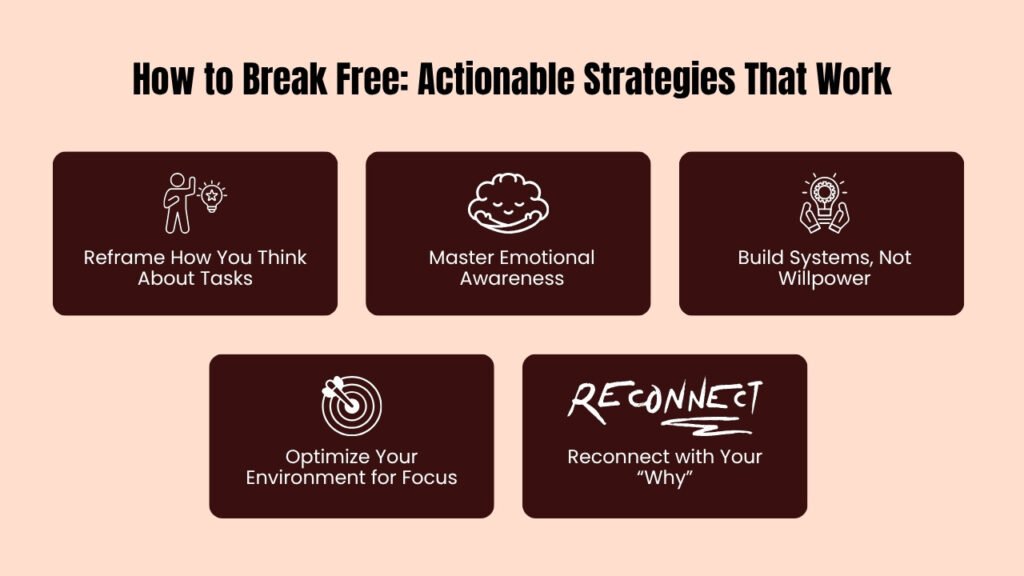
1. Reframe How You Think About Tasks
When you view a task as massive or intimidating, your brain naturally avoids it. The key is to make it feel manageable and achievable.
- Break tasks into micro-actions: Instead of thinking, “I need to finish the entire report,” start with “I’ll write the first paragraph.” Small wins create momentum, and momentum builds confidence.
- Apply the 2-Minute Rule: If a task takes less than two minutes, do it immediately. If it’s longer, commit to just starting for two minutes — often, getting started is all you need to keep going.
- Use implementation intentions: Turn vague intentions into specific actions. For example, say to yourself, “If it’s 10 AM, I’ll start writing the report.” This creates a mental cue that reduces hesitation and boosts follow-through.
When you break down and reframe your work this way, tasks feel lighter — and starting becomes natural instead of stressful.
2. Master Emotional Awareness
Most procrastination stems from emotional avoidance, not lack of discipline. You’re not avoiding the task itself — you’re avoiding how it makes you feel.
- Recognize what emotion you’re avoiding: Is it fear of failure, boredom, or insecurity about your abilities? Naming the emotion helps you face it directly.
- Replace self-criticism with curiosity: Instead of judging yourself for procrastinating, ask, “What’s really behind my delay?” This shifts your mindset from shame to understanding.
- Try this short exercise:
- Pause — Stop for a moment when you notice yourself delaying.
- Label the feeling — Identify the exact emotion (e.g., fear, doubt, fatigue).
- Take one small step — Do a simple action related to the task. The goal isn’t perfection — it’s progress.
This mindful awareness helps you take control of your emotions, so procrastination no longer controls you.
3. Build Systems, Not Willpower
Relying on willpower alone is a losing battle — it depletes throughout the day. Instead, create systems that make action automatic.
- Use time-blocking: Schedule focused work sessions for specific tasks. Treat them like appointments you can’t skip.
- Eliminate decision fatigue: Plan your day the night before — decide what to do, when, and where. Fewer decisions mean more energy for deep work.
- Create accountability: Share your goals publicly or with a trusted partner. Use apps or productivity groups to track your progress. When others expect updates, you’re more likely to stay consistent.
Systems make productivity predictable. They turn action into a habit, not a daily struggle.
4. Optimize Your Environment for Focus
Your surroundings can either fuel your focus or feed your procrastination. Designing a distraction-free environment helps your brain stay in work mode.
- Declutter your digital space: Close unnecessary tabs, mute notifications, and use website blockers during work hours.
- Use environmental cues: Keep your tools and workspace ready before you start — a clean desk signals it’s time to work.
- Leverage technology smartly: Use apps that support focus, such as Pomodoro timers, task managers, or AI note-takers. Avoid apps that trigger endless scrolling or multitasking.
A focused environment reduces friction, helping you start tasks faster and stay engaged longer.
5. Reconnect with Your “Why”
When motivation fades, purpose sustains you. To truly stop procrastinating, you need a strong “why” behind your work.
- Identify the long-term goal: Ask yourself, “Why does this task matter?” Maybe it moves you closer to financial freedom, better health, or personal growth.
- Align your actions with purpose: When your daily tasks connect to something meaningful, they stop feeling like obligations and start feeling like progress.
- Try journaling prompts:
- What will my life look like if I keep delaying this goal?
- What will change if I take action today?
- How will my future self thank me for doing this?
By reconnecting with your deeper motivation, you’ll find that consistency becomes natural — because every task now serves a purpose greater than itself.
These strategies aren’t quick fixes — they’re sustainable mindset and system shifts. When applied together, they’ll help you overcome procrastination, reduce emotional resistance, and create a lifestyle of steady, meaningful progress.
Procrastination Recovery Plan: 7-Day Kickstart
Breaking free from procrastination doesn’t happen overnight — it’s a process of self-awareness, structure, and consistency. This 7-day procrastination recovery plan is designed to help you take small, consistent steps toward lasting change. Each day builds on the last, helping you shift from avoidance to action while celebrating progress along the way.
Day 1–2: Awareness and Reflection
Before you can change your habits, you need to understand them. The first two days are about identifying your procrastination patterns — when, why, and how you tend to delay tasks.
Action Steps:
- Keep a Procrastination Journal for two days. Note what tasks you avoid, how you feel before and after, and what triggers your delay.
- Ask yourself: What am I really avoiding? (Fear, overwhelm, boredom, perfectionism?)
- Reflect on how procrastination has affected your goals, mood, and confidence.
Goal: Build self-awareness and clarity. You can’t fix what you don’t understand.
Day 3–4: Build Small Wins and Structure
Once you know your triggers, it’s time to take control with structure and small victories. Momentum builds confidence — and confidence kills procrastination.
Action Steps:
- Pick one task you’ve been delaying and break it into the smallest possible steps.
- Apply the 2-Minute Rule: Start working for just two minutes. Once you start, you’ll likely keep going.
- Schedule focused blocks of work (Pomodoro method: 25 minutes work + 5 minutes rest).
- Eliminate obvious distractions — silence notifications, clean your workspace, and close unnecessary tabs.
Goal: Create structure and gather early wins. Small progress today sets the tone for bigger success tomorrow.
Day 5–6: Create Accountability
Procrastination thrives in isolation. When no one knows your goals, there’s no pressure to follow through. Accountability transforms intention into action.
Action Steps:
- Share your goals with a friend, mentor, or accountability partner.
- Use a public commitment system — post your progress online, join a productivity group, or use apps like Focus mate or Habitica.
- Set clear daily check-ins: report what you completed and what’s next.
- Reward yourself for consistency — even small wins deserve recognition.
Goal: Replace internal pressure with external motivation. Accountability turns your goals into commitments, not options.
Day 7: Review and Reset for Consistency
By Day 7, you’ve built awareness, structure, and accountability. Now it’s time to reflect, reset, and plan forward so progress continues beyond this week.
Action Steps:
- Review your journal from Day 1 — notice how your thoughts and habits have changed.
- Identify what worked best for you: morning focus, breaks, or external accountability?
- Write a short “Next 7 Days” action plan that builds on your wins.
- Celebrate your effort — not perfection. Recognize that consistency matters more than intensity.
Goal: Reinforce positive habits and prepare to sustain your progress long-term.
Track Your Progress and Celebrate Every Win
Keep a visual tracker — a simple calendar or habit app — to mark every day you take action. Seeing your streak grow builds motivation. Each check mark represents not just a completed task but a mental victory over procrastination.
Remember, overcoming procrastination is not about doing everything perfectly — it’s about showing up even when you don’t feel ready. This 7-day recovery plan is your first step toward mastering consistency, confidence, and control over your time.
By the end of this week, you’ll not only understand how to stop procrastinating, but also experience how it feels to take steady, purposeful action — one day at a time.
Conclusion: Progress Over Perfection
Procrastination isn’t a sign of weakness, laziness, or lack of ambition — it’s a habit pattern, shaped by fear, emotion, and avoidance. The good news? Like any habit, it can be unlearned and replaced with new patterns of clarity, courage, and action.
The real victory doesn’t come from doing everything perfectly — it comes from showing up, even when you don’t feel ready. Every time you start instead of delay, you train your mind to choose progress over comfort. Over time, those small moments of action build momentum, confidence, and lasting self-discipline.
So, take one small step today — send that email, open that document, go for that short walk. Don’t wait for motivation to appear; create it through action.
Remember, success doesn’t come from perfection — it comes from consistency. Start now, keep moving forward, and let every step you take become proof that you’re capable of more than you once believed.
Frequently Asked Questions
1. Why do I procrastinate even when I know it’s bad for me?
Procrastination often isn’t about laziness — it’s an emotional response. You may be avoiding discomfort, fear of failure, or feeling overwhelmed. Recognizing these emotions is the first step to overcoming procrastination.
2. How can I stop procrastinating instantly?
There’s no magic switch, but starting small works wonders. Try the 2-Minute Rule — begin a task for just two minutes. Once you start, momentum builds naturally, making it easier to keep going.
3. What are the main causes of procrastination?
Common causes include fear of failure, perfectionism, lack of clarity, and decision fatigue. Understanding your personal triggers helps you create strategies to stop procrastinating effectively.
4. How does procrastination affect mental health?
Chronic procrastination can lead to guilt, stress, anxiety, and even burnout. It creates a cycle of avoidance and self-blame that affects confidence and emotional well-being.
5. What’s the best long-term way to overcome procrastination?
The key is consistency — not perfection. Build small daily habits, set clear goals, and create systems that support focus and accountability. Over time, these actions retrain your brain to choose progress over delay.