
For decades, society has celebrated high IQ as the ultimate indicator of intelligence and success. From school report cards to corporate hiring decisions, cognitive ability has long been treated as the gold standard for measuring potential. But here’s the truth that’s reshaping how we define intelligence — IQ alone doesn’t guarantee success, happiness, or effective leadership.
Many people with exceptional IQs often struggle in areas that matter most — building meaningful relationships, managing emotions, and handling life’s inevitable stress. On the other hand, individuals with strong Emotional Intelligence (EQ) often thrive, not because they’re the smartest in the room, but because they understand themselves and others on a deeper level.
Emotional Intelligence (EQ) refers to the ability to recognize, understand, and manage one’s own emotions — while also being able to navigate and influence the emotions of others. It’s the skill that allows people to stay calm under pressure, show empathy in conversations, resolve conflicts effectively, and inspire those around them.
In today’s fast-paced, emotionally charged world, EQ has become a cornerstone of personal and professional growth. Research consistently shows that emotional intelligence predicts success more accurately than IQ, particularly in leadership, communication, and well-being. Simply put — it’s no longer about how smart you are, but how well you understand and manage emotions that truly determines your success.
This shift challenges traditional beliefs about intelligence and opens up a more holistic view of what it means to be truly successful — one that values empathy, self-awareness, and human connection just as much as intellect.
Table of Contents
Understanding Emotional Intelligence
What Is Emotional Intelligence (EQ)?
Emotional Intelligence (EQ) is the ability to recognize, understand, and manage both your own emotions and the emotions of others. It’s not about suppressing feelings or avoiding emotions — it’s about being aware of them, interpreting them accurately, and using that awareness to guide your thoughts and actions effectively.
From a psychological and behavioral science perspective, EQ plays a crucial role in how people perceive themselves, communicate with others, make decisions, and handle challenges. Unlike IQ, which measures logical reasoning, analytical skills, and problem-solving ability, emotional intelligence measures emotional awareness, empathy, and interpersonal effectiveness.
The concept of EQ was popularized by psychologist Daniel Goleman, who identified it as a key differentiator between average and exceptional performers. According to Goleman, emotional intelligence consists of several interrelated skills that determine how well individuals navigate social complexities and maintain balance under pressure.
To understand EQ better, it’s important to distinguish it from IQ and personality traits:
- IQ reflects cognitive abilities — how you process information, reason, and learn. It’s largely stable over time.
- Personality describes your general tendencies and preferences — how you typically behave or react.
- Emotional Intelligence, however, is a learnable skill that evolves through awareness, reflection, and practice. It’s the bridge that connects intellect with emotion, helping you think clearly while staying emotionally balanced.
In essence, IQ may help you get the job, but EQ determines how well you perform, lead, and connect once you’re there.
The Four Core Components of Emotional Intelligence
Psychologist Daniel Goleman identified four core components of emotional intelligence that define how people understand and manage emotions. These components are essential to building emotional strength, better relationships, and personal growth.
1. Self-Awareness
Self-awareness is the foundation of emotional intelligence. It involves recognizing your emotions as they occur and understanding how they affect your thoughts, decisions, and behavior.
A self-aware person can identify emotional triggers, understand personal strengths and weaknesses, and align their reactions with their values. This awareness leads to greater confidence and emotional stability in decision-making.
2. Self-Management
Self-management is the ability to control impulsive feelings and behaviors, stay calm under stress, and adapt to changing circumstances.
It’s not about suppressing emotions but about managing them effectively. People with strong self-management remain composed during challenges, think before reacting, and maintain a solution-focused mindset even in high-pressure situations.
3. Social Awareness
Social awareness is the capacity to recognize and understand the emotions of others. It includes empathy — the ability to sense how others feel and respond appropriately.
Individuals with high social awareness are skilled at reading nonverbal cues, listening actively, and building trust. This skill is vital for teamwork, leadership, and building strong interpersonal relationships.
4. Relationship Management
Although covered in detail later, relationship management integrates all the above skills. It’s about using emotional insight to communicate effectively, manage conflict, and inspire others.
Together, these components form the backbone of emotional intelligence, empowering individuals to navigate both personal and professional environments with emotional clarity, empathy, and resilience. Developing these abilities doesn’t just make you more emotionally balanced — it helps you connect with others more deeply and lead a more meaningful, successful life.
Why Emotional Intelligence Matters More Than IQ
For years, intelligence was measured by test scores and academic achievements — but modern research proves that intellect alone doesn’t guarantee success. While IQ determines how well you process information, emotional intelligence (EQ) determines how well you connect, adapt, and lead. In today’s world, where communication, collaboration, and empathy define personal and professional success, EQ often outweighs IQ in real-life impact.

The Limitations of IQ in Real-Life Success
IQ — or Intelligence Quotient — primarily measures logical reasoning, analytical ability, and problem-solving skills. It reveals how smart a person is but not how effectively they can manage emotions, adapt under stress, or navigate human relationships.
This limitation becomes clear when observing high-IQ professionals who struggle to thrive in team environments. They may excel technically but often face difficulties handling criticism, motivating others, or resolving interpersonal conflicts. Without emotional adaptability, even the most intelligent minds can experience burnout, strained relationships, and missed leadership opportunities.
Multiple studies confirm that IQ accounts for only about 20% of success, while the remaining 80% depends on emotional and social factors. In fact, research by Daniel Goleman and Harvard Business Review highlights that emotional intelligence is twice as important as technical skills or IQ in predicting outstanding performance.
In essence, IQ may open doors, but EQ determines how far you go once you step through them.
EQ as the Core of Personal and Professional Success
Emotional Intelligence influences every aspect of how we live, work, and connect with others. It shapes decision-making, enhances relationships, and strengthens resilience — the ability to recover quickly from challenges.
- Relationships and Communication:
High EQ individuals build stronger, more trusting relationships because they understand emotional cues, listen empathetically, and communicate with respect and clarity. - Decision-Making and Self-Control:
Emotional awareness helps people think before reacting. They don’t let stress or anger dictate their choices, leading to better, more balanced decisions. - Resilience and Mental Strength:
EQ fosters emotional regulation — a key factor in maintaining motivation, handling setbacks, and staying calm under pressure. People with strong EQ bounce back faster and learn from failure rather than being defined by it. - Happiness and Mental Health:
Studies show that emotionally intelligent people experience lower stress levels, higher satisfaction, and better overall well-being. They’re better at managing negative emotions and nurturing a positive mindset, contributing to long-term happiness.
Real-world examples of this principle are everywhere. Emotionally intelligent leaders — like Oprah Winfrey, Satya Nadella, and Jacinda Ardern — are admired not just for intellect but for empathy, humility, and self-awareness. Their success demonstrates that emotional intelligence amplifies influence and impact far beyond what IQ alone can achieve.
Emotional Intelligence in the Workplace
In modern workplaces, EQ has become one of the most sought-after skills. Employers now recognize that technical expertise is no longer enough — success requires emotional awareness, communication, and collaboration.
1. The Role of EQ in Communication and Leadership
Leaders with high EQ inspire trust and foster open communication. They understand their team’s emotions, provide constructive feedback, and navigate conflicts without creating tension. This emotional agility creates stronger teams and a healthier work culture.
2. EQ-Driven Skills Employers Value Most
- Effective teamwork and collaboration
- Conflict resolution and negotiation
- Adaptability and stress management
- Empathy and active listening
- Self-motivation and accountability
3. Research and Statistics Supporting EQ in the Workplace
- According to a study by TalentSmart, 90% of top performers have high emotional intelligence.
- Forbes reports that organizations prioritizing EQ in leadership see up to 20% higher productivity and significantly lower turnover rates.
- A World Economic Forum report lists emotional intelligence among the top 10 essential skills for the future of work.
These findings reinforce that EQ isn’t just a soft skill — it’s a strategic advantage. Employees with strong emotional intelligence enhance company culture, improve communication, and drive better results.
In conclusion, while IQ determines how well you think, EQ determines how well you connect, lead, and thrive. Emotional intelligence transforms knowledge into meaningful action — turning intellect into influence, and potential into lasting success.
Emotional Intelligence vs. IQ: A Balanced Perspective
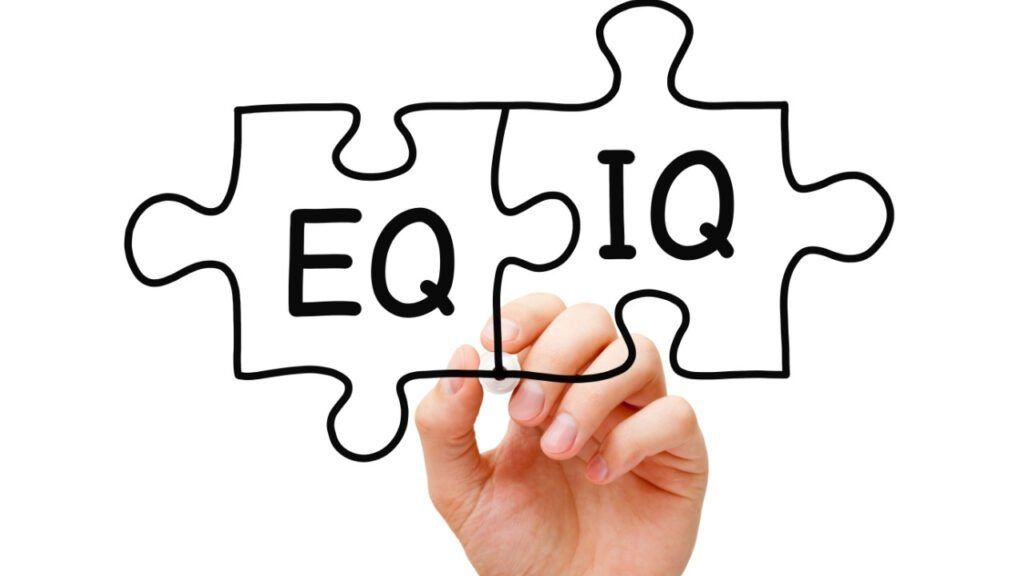
In the long-standing debate of Emotional Intelligence (EQ) vs. Intelligence Quotient (IQ), it’s easy to view them as opposing forces — one emotional, one rational. However, the truth lies in balance. Both forms of intelligence hold unique value, but their roles in achieving success are distinctly different. Understanding how they complement each other offers a more complete view of what it truly means to be intelligent in the modern world.
The Role of IQ: Cognitive Excellence and Analytical Thinking
IQ, or Intelligence Quotient, measures cognitive abilities such as logical reasoning, problem-solving, memory, and analytical thinking. People with high IQs tend to grasp complex concepts quickly, excel academically, and perform well in technical or data-driven fields.
While IQ helps individuals analyze, plan, and execute effectively, it primarily focuses on intellectual capacity rather than emotional adaptability. In isolation, a high IQ may produce strong technical skills but doesn’t always guarantee effective communication, leadership, or emotional resilience — qualities that are vital in today’s interconnected world.
The Power of EQ: Adaptability and Human Connection
Emotional Intelligence (EQ), on the other hand, determines how well individuals understand themselves and others. It governs the ability to stay calm under pressure, resolve conflicts gracefully, and lead with empathy. EQ is what helps you build relationships, inspire teams, and make emotionally intelligent decisions — even in challenging circumstances.
Unlike IQ, which is largely stable throughout life, EQ can be developed and strengthened through mindfulness, feedback, and self-awareness. This adaptability makes it an essential skill for navigating modern-day complexities — from workplace dynamics to personal growth and mental well-being.
Why Both IQ and EQ Matter — The Formula for Holistic Success
When IQ and EQ work together, they create what psychologists call “holistic intelligence” — the balance between intellectual ability and emotional wisdom. A person with strong cognitive skills but low emotional awareness may struggle to connect with others, while someone with high EQ but limited technical knowledge may lack precision in problem-solving.
True success happens when the two align:
- IQ enables you to understand the what and how of a situation.
- EQ empowers you to understand the why — the emotions, motivations, and human factors that drive behavior.
Professionals who blend both forms of intelligence are more likely to innovate, lead effectively, and sustain long-term success. They combine logic with empathy, strategy with understanding, and intelligence with compassion — creating meaningful impact wherever they go.
Conclusion: The True Measure of Intelligence in the Modern World
For much of human history, IQ was seen as the ultimate marker of intelligence and success. Academic achievements, test scores, and logical reasoning were once considered the key predictors of a person’s potential. But as the world evolved — becoming more collaborative, emotionally complex, and human-centered — our understanding of intelligence had to evolve, too.
Today, success is no longer defined solely by how smart you are, but by how emotionally aware and adaptable you can be. The shift from IQ-based achievement to EQ-driven success reflects a deeper truth: emotions shape behavior more powerfully than logic ever could.
Emotional intelligence is what allows you to stay calm during conflict, show empathy when others need support, and navigate challenges with resilience and clarity. It influences not only your performance and relationships but also your overall happiness and mental well-being. High EQ individuals experience greater life satisfaction, stronger connections, and more meaningful success — the kind that lasts beyond titles or accomplishments.
Developing emotional intelligence isn’t something that happens overnight — it’s a daily practice. It begins with self-awareness, mindful reflection, and a willingness to grow through every interaction and setback. The more you nurture your emotional intelligence, the more equipped you become to handle life’s complexities with grace and confidence.
Start today. Pay attention to how you feel, how you respond, and how you connect with others. Listen more deeply. Pause before reacting. Lead with empathy and intention. Over time, you’ll find that true intelligence isn’t measured by how much you know — but by how deeply you understand yourself and the people around you.
Because in the modern world, emotional intelligence isn’t just an advantage — it’s the true measure of success.
Frequently Asked Questions
1. What is emotional intelligence (EQ)?
Emotional intelligence is the ability to recognize, understand, and manage your own emotions while also perceiving and influencing the emotions of others. It’s a key skill for personal growth, relationships, and professional success.
2. How is emotional intelligence different from IQ?
IQ measures cognitive abilities like logic, reasoning, and problem-solving, while EQ focuses on emotional awareness, empathy, and interpersonal effectiveness. Both are important, but EQ often determines real-world adaptability and success.
3. Can emotional intelligence be developed?
Yes, unlike IQ, emotional intelligence can be improved over time through self-awareness, mindfulness, active listening, and practice in managing emotions and relationships.
4. Why is emotional intelligence important in the workplace?
EQ helps in communication, leadership, conflict resolution, teamwork, and adaptability. Employers value emotionally intelligent employees because they contribute to a positive work culture and drive better results.
5. What are the benefits of having high emotional intelligence?
High EQ improves relationships, mental health, decision-making, resilience, and overall life satisfaction. It enables better self-control, empathy, and the ability to influence and inspire others effectively.