
Personal transformation isn’t a single breakthrough moment — it’s a continuous journey of evolving your mindset, habits, and daily actions. It’s about aligning who you are today with who you want to become tomorrow. True personal transformation goes beyond external success; it’s the inner work that shapes your thoughts, emotions, and behaviors to create lasting change in every area of life.
Yet, many people struggle to grow consistently. They start with enthusiasm but quickly lose focus, get overwhelmed by life’s demands, or revert to old patterns that hold them back. The reason isn’t a lack of motivation — it’s the absence of simple, sustainable habits that turn inspiration into action.
The good news? You can fast-track your personal and professional transformation by mastering a few daily habits that rewire your mindset and strengthen your self-discipline. These habits act as the foundation for consistent growth, clarity, and purpose.
Let’s explore the seven proven habits that can transform your life from the inside out.
Table of Contents
Understanding Personal Transformation
What It Really Means
Personal transformation is more than just adopting new routines or chasing short-term goals — it’s a deep, lasting shift in mindset, behavior, and self-awareness. It’s the process of becoming the best version of yourself by letting go of limiting beliefs and replacing them with empowering ones. True personal transformation happens when you begin to align your thoughts, emotions, and actions with your long-term vision of success.
Unlike surface-level self-improvement, transformation is an internal evolution. It’s not about fixing who you are but uncovering your true potential. This change doesn’t happen overnight; it’s built through intentional choices, self-reflection, and the willingness to grow through discomfort.
Why It Matters
Consistent habits are the foundation of real transformation. Every small daily action — whether it’s practicing gratitude, exercising, or setting mindful goals — shapes who you become. When these actions are repeated with purpose, they create ripple effects across every area of life.
In your health, transformation looks like building energy and discipline through movement and mindful living. In your career, it shows up as confidence, focus, and the courage to pursue meaningful goals. And in your relationships, it means showing up as your authentic self, communicating with empathy, and growing together with others.
Transformation thrives on consistency. The more you commit to daily habits for success, the more you rewire your brain and behavior for growth. Over time, this shift leads to lasting fulfillment — not just momentary motivation.
By understanding what personal transformation truly means, you can move beyond temporary change and build a life rooted in progress, resilience, and purpose. If you’ve ever wondered how to change your life in a way that lasts, it starts with cultivating a growth mindset and showing up for yourself every single day.
7 Daily Habits That Accelerate Your Personal Transformation
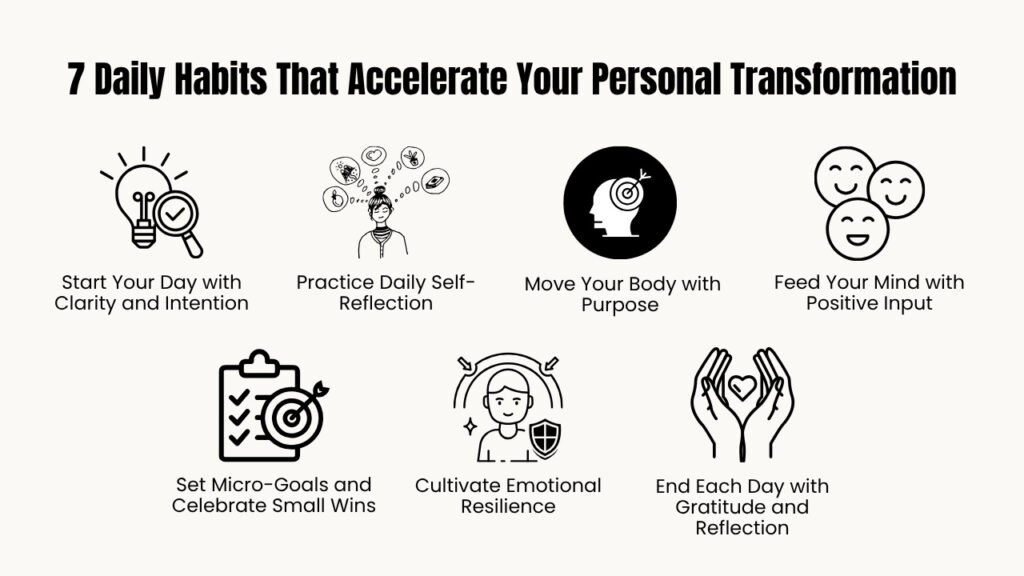
1. Start Your Day with Clarity and Intention
The way you start your morning sets the tone for your entire day — and ultimately, your life. A well-structured morning routine helps you cultivate focus, confidence, and emotional balance before the day’s distractions begin. Starting your day with clarity and intention allows you to operate from purpose rather than pressure.
Simple tools can make this practice effortless: try journaling your goals, visualizing your ideal day, or setting a “daily theme” like focus, gratitude, or growth. Research shows that intentional morning practices improve productivity, enhance mood, and boost decision-making throughout the day.
When you begin each morning with purpose, you’ll feel more centered, organized, and ready to take on challenges — eliminating that familiar sense of overwhelm and lack of direction that keeps so many people stuck.
2. Practice Daily Self-Reflection
Self-reflection is one of the most underrated yet powerful habits for personal transformation. It gives you the space to process your emotions, evaluate your choices, and turn everyday experiences into valuable lessons. Without reflection, growth becomes accidental; with it, transformation becomes intentional.
Start with a simple practice — take five minutes each evening to journal or note what you’re grateful for. Ask yourself: “What did I learn today?” or “How did I show up as my best self?” These questions shift your focus from mistakes to improvement, helping you stay aligned with your growth journey.
This small act of self-awareness rewires your brain for mindfulness and emotional intelligence. It also helps you break the cycle of emotional reactivity, giving you more control over your thoughts and actions.
3. Move Your Body with Purpose
Your physical state directly influences your mental and emotional wellbeing. Movement isn’t just about fitness — it’s about creating energy, clarity, and confidence that fuel personal transformation. When you move your body, you also move your mindset.
You don’t need a strict gym routine to see results. Simple activities like morning walks, stretching, yoga, or quick home workouts can recharge your body and refocus your mind. Studies consistently show that regular exercise releases endorphins, reduces stress, and improves cognitive performance — all essential for sustained personal growth.
By integrating movement into your daily life, you strengthen both your physical resilience and your emotional stability. Over time, this habit helps eliminate fatigue, increase motivation, and create momentum for every other goal you pursue.
4. Feed Your Mind with Positive Input
Your mind becomes what you feed it. Every book you read, podcast you listen to, and person you spend time with shapes your thoughts, beliefs, and ultimately your destiny. If you constantly consume negative news, gossip, or toxic conversations, your mindset naturally mirrors that energy. But when you intentionally fill your mind with uplifting, growth-oriented content, your perspective and confidence begin to expand.
Start by creating an “information diet” that aligns with your goals. Limit distractions and negative media and replace them with content that inspires and educates you. Read 10 pages of a personal growth book daily or listen to a 15-minute self-improvement podcast during your commute.
Surround yourself with voices and communities that challenge you to grow, not complain. Over time, this consistent positive input helps you reprogram limiting beliefs and develop a growth mindset.
5. Set Micro-Goals and Celebrate Small Wins
Big goals can be exciting — but they can also feel overwhelming. The secret to sustainable personal transformation lies in setting micro-goals — small, achievable steps that keep you consistent and motivated.
When you break your vision into daily or weekly actions, progress becomes measurable and rewarding. This approach taps into the principle of compound growth — small improvements made consistently lead to extraordinary results over time.
Use practical tools like habit-tracking apps, weekly review checklists, or monthly progress journals to stay accountable. And don’t forget to celebrate small wins — each completed step is proof that transformation is happening.
Recognizing these victories keeps your momentum alive and prevents burnout, helping you stay connected to your long-term purpose.
6. Cultivate Emotional Resilience
Emotional resilience is the ability to stay calm, strong, and focused under pressure. It’s what allows you to bounce back from failure and adapt to change — both essential for personal transformation. Without resilience, even the best goals can fall apart when life gets difficult.
To strengthen your emotional resilience, practice mindfulness, deep breathing, or reframing challenges. For example, instead of seeing setbacks as signs of failure, view them as lessons that reveal your strengths and weaknesses.
Imagine losing a job or facing rejection — a resilient person doesn’t give up but uses the experience to grow wiser and more determined. Over time, this mindset helps you handle stress gracefully, make better decisions, and maintain a balanced perspective even in uncertainty.
7. End Each Day with Gratitude and Reflection
How you end your day matters just as much as how you start it. Evening rituals allow you to slow down, reset your mindset, and end each day on a positive note. Practicing gratitude and reflection helps you recognize progress, appreciate small blessings, and release mental clutter before bed.
Try writing down three wins or moments you’re thankful for each night. This simple exercise not only fosters contentment but also rewires your brain for optimism and motivation. Studies show that consistent gratitude practices improve sleep quality, emotional well-being, and overall happiness.
By closing your day with gratitude, you train your mind to focus on growth rather than gaps — a mindset that accelerates personal transformation over time.
Integrating These Habits into Your Lifestyle
Building a life of personal transformation isn’t about overnight change — it’s about consistency over intensity. The true magic happens when you integrate small, meaningful habits into your daily routine until they become second nature. Here’s how to make these seven habits stick and turn your personal growth into a lifestyle rather than a short-term project.
Tip 1: Start with One Habit at a Time
One of the biggest mistakes people make is trying to change everything at once. That approach quickly leads to overwhelm and burnout. Instead, focus on mastering one habit at a time.
Choose the habit that feels most achievable right now — maybe it’s journaling for five minutes in the morning or taking a short evening walk. Once it becomes natural, move on to the next one. This gradual approach builds confidence, reinforces discipline, and ensures sustainable change. Remember, small steps lead to big transformation.
Tip 2: Use Habit Stacking to Build Momentum
To make new habits easier to adopt, use a proven technique called habit stacking. This involves attaching a new behavior to an existing routine so your brain automatically connects the two.
For example:
- After brushing your teeth (existing habit), spend two minutes practicing gratitude (new habit).
- After your morning coffee, write down your top three priorities for the day.
- After your evening walk, reflect on one thing you learned today.
Habit stacking works because it leverages patterns that already exist in your life, making it effortless to stay consistent. Over time, these small, linked actions form a powerful chain of positive momentum.
Tip 3: Track Your Progress and Reward Consistency
Tracking your habits turns invisible progress into visible motivation. Use a habit tracker app, a journal, or even a simple checklist to monitor your consistency. When you see progress building up day by day, it reinforces the belief that you’re capable of long-term change.
Don’t forget to reward yourself for showing up — even small wins deserve recognition. Whether it’s treating yourself to a relaxing evening, buying a new book, or simply taking a moment to acknowledge your progress, celebrating consistency strengthens your commitment to growth.
Progress Over Perfection
Holistic personal growth thrives on consistency, not perfection. The goal isn’t to do everything flawlessly, but to keep showing up even when you don’t feel like it. Missing a day doesn’t mean you’ve failed — it’s part of the process.
Every small, intentional action contributes to your personal transformation — mentally, emotionally, and physically. By focusing on continuous improvement instead of impossible standards, you create a lifestyle that supports long-term growth, balance, and fulfillment.
Remember: Transformation doesn’t happen in a single leap; it happens in the small steps you repeat daily.
The Science Behind Habit-Driven Personal Transformation
Personal transformation isn’t just a motivational concept — it’s backed by powerful science. Psychology and neuroscience both confirm that consistent habits literally reshape the brain, influencing how we think, act, and perceive ourselves. Understanding this science helps you stay motivated and realistic about your growth journey.
How Do Habits Shape the Brain?
According to neuroscience, every time you repeat an action, your brain strengthens the neural pathways responsible for that behavior — a process known as neuroplasticity. Over time, these repeated actions form automatic patterns, making your new habits part of who you are.
This means personal transformation happens not through willpower alone, but through repetition. When you consistently practice mindfulness, gratitude, or goal setting, your brain begins to associate these actions with positive outcomes, reinforcing your motivation to continue. In short, your habits are rewiring your brain to align with your desired identity.
Researchers from University College London found that it takes an average of 66 days for a new behavior to become automatic — though this varies based on complexity and consistency. The key takeaway: transformation is gradual but inevitable when you stay consistent.
Why Small Changes Create Big Identity Shifts
In behavioral psychology, this principle is often called the compound effect — the idea that small, consistent actions create exponential results over time. When you make one positive change — like reading 10 minutes a day or exercising regularly — it triggers a ripple effect that influences other areas of your life.
These incremental shifts don’t just improve what you do; they change how you see yourself. For example, when you consistently meditate, you begin to view yourself as a calm, focused person. When you prioritize fitness, you start identifying as someone who values health and discipline. These new self-perceptions become the foundation of lasting personal transformation.
How Long Does It Take to See Real Personal Transformation?
While social media often glorifies instant results, genuine transformation takes time — but progress begins sooner than you think. Studies show that noticeable changes in mindset and behavior can appear within 3–4 weeks of consistent effort, while deeper identity shifts may take several months.
The good news? Every small step — every journal entry, every mindful breath, every intentional decision — is rewiring your brain toward lasting change. Transformation isn’t a single breakthrough moment; it’s the accumulation of hundreds of small victories that redefine who you are.
In essence: the science of habit formation proves that personal transformation is achievable for anyone willing to stay consistent. When you combine neuroscience-backed practices with self-awareness and discipline, your brain and identity evolve together — turning your daily habits into the building blocks of an extraordinary life.
Common Mistakes People Make During Personal Transformation
Embarking on a personal transformation journey is exciting — but it’s also where many people stumble. While motivation fuels the start, consistency determines success. Understanding the common mistakes that derail progress can help you avoid frustration and stay on track toward real, lasting change.

1. Relying on Motivation Instead of Discipline
Motivation is powerful, but it’s also temporary. It fluctuates based on your mood, energy, or circumstances — which makes it unreliable for long-term transformation. Many people wait to feel ready before taking action, but real growth happens when you act even when you don’t feel like it.
Discipline is what keeps you consistent when motivation fades. Building discipline means setting small commitments and following through, no matter how you feel. Over time, this consistency strengthens your identity and makes transformation effortless. Remember, discipline builds the habits that motivation can’t sustain.
2. Trying to Change Everything at Once
Another common mistake is trying to overhaul your entire life overnight. You start with enthusiasm — new diet, new morning routine, new mindset — but quickly feel overwhelmed and burned out. This “all-or-nothing” approach leads to inconsistency and discouragement.
The key is to focus on one habit at a time. Choose the habit that has the biggest impact on your overall growth, master it, and then layer on another. This method, known as incremental transformation, allows you to create sustainable progress without mental fatigue.
True change doesn’t happen through massive leaps; it’s built through consistent, manageable steps that compound over time.
3. Ignoring Mindset and Environment
Many people focus solely on actions — what to do — but overlook the inner and outer environments that support those actions. Your mindset determines your resilience, and your environment shapes your consistency. If you constantly surround yourself with negativity or self-doubt, it’s difficult to grow, no matter how many habits you practice.
Start by cultivating a growth mindset — believe that change is possible and progress is built through effort. Then, optimize your environment: declutter your space, set reminders, and surround yourself with people who inspire your evolution. When your mind and surroundings are aligned, your transformation becomes natural and sustainable.
Solution: Focus on One Powerful Habit and Expand Gradually
The most effective way to sustain personal transformation is to simplify your approach. Instead of chasing perfection, focus on one powerful habit that aligns with your core goals. Practice it consistently until it becomes second nature, then build upon that foundation.
This gradual, intentional approach prevents burnout, reduces overwhelm, and ensures that every change you make becomes a permanent part of who you are.
Remember, transformation is not a race — it’s a lifelong process. By focusing on steady progress rather than quick fixes, you’ll create lasting growth that continues to evolve with you.
Conclusion
Personal transformation is not achieved through quick fixes or sudden breakthroughs — it’s the result of small, consistent actions practiced day after day. Each habit you adopt, from mindful mornings to gratitude journaling, compounds over time, gradually reshaping your mindset, behavior, and identity. The journey may feel slow at first, but every intentional step brings you closer to becoming the best version of yourself.
Start today by choosing one habit from the seven we’ve explored and commit to practicing it consistently. Remember, transformation begins with action — not perfect plans.
For a deeper dive into creating a full roadmap for lasting personal transformation, visit our main blog where you’ll find step-by-step guides, tools, and resources designed to help you grow in every area of your life. By taking small, deliberate actions today, you set the stage for meaningful change that lasts a lifetime.
Frequently Asked Questions
1. What is personal transformation and why is it important?
Personal transformation is the process of evolving your mindset, behaviors, and self-awareness to align with your goals and values. It’s important because it enables lasting growth in health, career, relationships, and overall life satisfaction.
2. How long does it take to see real personal transformation?
While small positive changes can be noticed within 3–4 weeks, deep personal transformation often takes several months of consistent effort. The key is daily practice and building sustainable habits.
3. What are the most effective daily habits for personal transformation?
Some of the most impactful habits include starting your day with intention, practicing self-reflection, moving your body, consuming positive input, setting micro-goals, cultivating emotional resilience, and ending your day with gratitude.
4. How can I stay consistent with my personal transformation habits?
Focus on one habit at a time, use habit stacking to attach new habits to existing routines, track your progress, and reward yourself for consistency. Small, repeated actions build long-term results.
5. Can personal transformation help in my career and relationships?
Yes. Personal transformation improves focus, emotional intelligence, and decision-making, which positively impacts career growth and enhances communication, empathy, and connection in relationships.