
Most people hear the word mindfulness and immediately picture someone sitting cross-legged for an hour in total silence. It sounds peaceful — but also unrealistic when you’re juggling work deadlines, endless notifications, and a constantly racing mind. This common misconception keeps many from ever starting, believing they simply don’t have the time or space to “be mindful.”
The truth is that mindfulness isn’t about how long you practice — it’s about how present you are. Even a few intentional minutes a day can create measurable shifts in your focus, mood, and overall well-being. Studies show that short, consistent mindfulness sessions can reduce stress hormones, lower anxiety, and improve concentration — all without requiring you to block out a big chunk of your day.
If you’ve ever thought, “I’m too busy to meditate” or “I can’t quiet my mind long enough,” this guide will change how you see mindfulness. In the next few minutes, you’ll discover simple, science-backed techniques to bring calm and clarity into your life — no special setup, no hour-long commitment, just five mindful minutes that fit effortlessly into your day.
Table of Contents
What Is Mindfulness, Really? (And Why It Matters)
At its core, mindfulness simply means being fully present in the moment — aware of where you are, what you’re doing, and how you’re feeling, without judgment or distraction. It’s not about emptying your mind or reaching a state of perfection. Instead, mindfulness is about noticing — your breath, your thoughts, your surroundings — and allowing yourself to experience them as they are.
The meaning of mindfulness traces back thousands of years to ancient Buddhist traditions, where it was practiced as a path to self-awareness and inner peace. Today, mindfulness has evolved into a secular, science-supported practice embraced by psychologists, therapists, and high-performing professionals alike.
Modern research continues to reveal the benefits of mindfulness — even short, daily practices can lower stress levels, reduce anxiety, and improve focus and emotional regulation. A study from Harvard University found that mindfulness meditation changes brain regions linked to memory, empathy, and emotional control. In simpler terms, a few mindful minutes each day can help you think clearer, stay calmer, and respond to life’s challenges more thoughtfully.
So when we talk about what mindfulness practice really is, it’s not something you “do” — it’s a way of being. Whether you’re drinking coffee, walking, or working, mindfulness invites you to slow down, tune in, and live with more awareness.
Why 5 Minutes Is Enough to Start (Science & Psychology Behind It)
One of the biggest misconceptions about mindfulness is that it takes long hours to feel any real benefit. In reality, even a few mindful minutes a day can make a powerful difference. This is where the concept of micro-mindfulness comes in — short, focused bursts of awareness that train your brain to slow down and stay present.
From a psychological standpoint, micro-mindfulness works because it taps into how habits are formed. According to behavioral science, small, repeatable actions are easier for your brain to remember and maintain. When you practice mindfulness for just five minutes a day, you’re not just relaxing — you’re rewiring your mind to focus better and respond to stress more calmly over time.
Research supports this too. Studies published in journals like Mindfulness and Psychological Science show that even short, consistent mindfulness sessions can improve attention span, emotional balance, and overall well-being. The key isn’t how long you practice — it’s how often.
To make it sustainable, you can pair your mindfulness with an existing routine — a concept called habit stacking. For example, take a mindful pause after brushing your teeth, before your morning coffee, or right before starting work. Over time, these small rituals build lasting calm without feeling forced.
Here are a few benefits of 5-minute mindfulness that make it ideal for beginners:
- Builds awareness quickly: You start noticing your thoughts and reactions almost immediately.
- Easier to maintain daily: Short sessions fit naturally into a busy schedule, increasing consistency.
- Reduces overwhelm for beginners: Five minutes feels achievable, helping you start — and stick with — the practice.
Even a few mindful breaths can shift how you feel, think, and respond. Remember, mindfulness isn’t about how much time you spend — it’s about how present you are in the time you have.
Step-by-Step: How to Practice Mindfulness in 5 Minutes a Day
You don’t need a meditation cushion or a silent retreat to feel the benefits of mindfulness. All you need is five intentional minutes and a willingness to pause. Here’s a simple, science-backed 5-minute mindfulness routine that anyone — even total beginners — can follow anywhere, anytime.
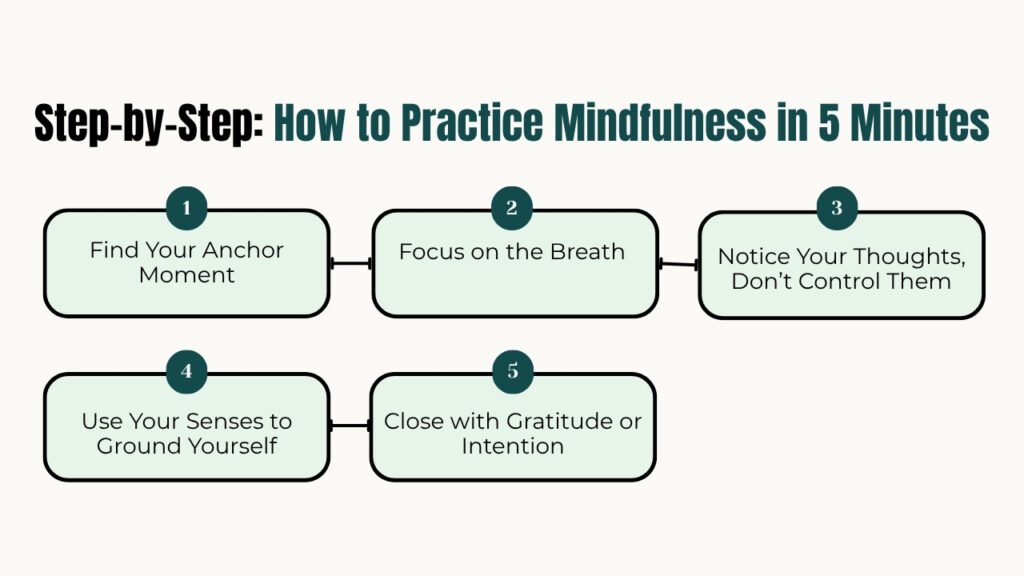
Step 1: Find Your Anchor Moment
Start by choosing a moment in your daily routine that will remind you to be mindful. This could be while drinking your morning coffee, during your commute, before bed, or even while waiting for a meeting to start.
Your anchor moment acts as a trigger — a cue that tells your mind, “It’s time to pause and be present.” The goal is to integrate mindfulness naturally into your life rather than treating it as another task.
Examples:
- Take 5 mindful minutes before checking your phone in the morning.
- Practice during your lunch break.
- Wind down before sleep with quiet awareness.
Step 2: Focus on the Breath
Once you’ve found your moment, gently bring your attention to your breathing. The breath is the easiest and most powerful anchor for mindfulness because it’s always with you.
Try the 4-4-4 method:
- Inhale slowly through your nose for 4 seconds.
- Hold your breath for 4 seconds.
- Exhale gently through your mouth for 4 seconds.
Repeat this for one minute, allowing your breath to guide your focus. If your mind wanders, that’s okay — simply notice it and return to your breath. Over time, this builds calm and awareness naturally.
Step 3: Notice Your Thoughts, Don’t Control Them
As you breathe, thoughts will come — plans, worries, distractions. Instead of trying to silence them, practice the art of observation. Imagine your thoughts as clouds passing through the sky — you see them, acknowledge them, and let them drift away.
This “observe, don’t engage” technique trains your brain to stop reacting automatically to every thought. Awareness, not suppression, is what creates true calm. The more you practice, the easier it becomes to find clarity amid mental noise.
Step 4: Use Your Senses to Ground Yourself
Bring your attention to the present moment by engaging your senses. This simple 5-sense check can instantly anchor you during stress or distraction:
- See: Notice five things around you.
- Hear: Listen for four sounds you can identify.
- Feel: Pay attention to three sensations (the floor beneath your feet, your breath, your clothing).
- Smell: Identify two scents in your environment.
- Taste: Focus on one lingering taste (water, coffee, or even your breath).
Grounding through your senses reconnects you with reality and helps calm racing thoughts.
Step 5: Close with Gratitude or Intention
End your 5-minute mindfulness session with a brief reflection. Take a slow breath and think of one thing you’re grateful for — it could be as simple as your health, a quiet moment, or the chance to pause.
You can also set an intention, such as “I will move through today with calm and focus.” This simple step creates a mental reset, helping you carry mindfulness into the rest of your day.
In just five minutes, you’ve given your mind a chance to slow down, reset, and breathe. The more you repeat this short mindfulness for beginners routine, the more naturally it will become part of your daily rhythm — bringing calm, focus, and clarity whenever you need it most.
Common Mistakes Beginners Make (And How to Avoid Them)
When you’re new to mindfulness, it’s easy to feel like you’re doing it wrong. But the truth is, there’s no perfect way to be mindful — it’s a practice, not a performance. Still, beginners often fall into a few common traps that make it harder to stay consistent or experience the benefits. Let’s look at these mistakes and how to fix them so your mindfulness journey feels simple, natural, and effective.
1. Overthinking the Process or Expecting Instant Calm
Many people start mindfulness hoping it will instantly make them calm or stop their thoughts altogether. When that doesn’t happen, they assume they’ve failed. But mindfulness isn’t about “clearing your mind” — it’s about noticing what’s happening without judgment.
Quick Fix:
Let go of the goal of instant peace. Instead, focus on the act of noticing — your breath, your body, your surroundings. Think of mindfulness as training a muscle; each time your mind wanders and you bring it back, you’re getting stronger.
2. Being Inconsistent or Treating Mindfulness Like a Task
Another common mistake is treating mindfulness like a chore on your to-do list. You might practice for a few days, skip a few, and then feel guilty for not sticking with it. This “all-or-nothing” mindset kills progress.
Quick Fix:
Keep it short and flexible. Practice for just five minutes a day — even one mindful breath counts. Try linking it with daily habits, like morning coffee or brushing your teeth. The goal is consistency, not perfection. Small, regular practice creates bigger results than long, occasional sessions.
3. Judging Yourself During Practice
Beginners often criticize themselves for getting distracted or “not being mindful enough.” Ironically, that self-judgment pulls you out of the present moment. Mindfulness thrives on curiosity, not criticism.
Quick Fix:
When your mind drifts, gently remind yourself — “I’m noticing, and that’s mindfulness too.” Every distraction is an opportunity to practice awareness. The more compassionate you are with yourself, the deeper your mindfulness grows.
Learning how to practice mindfulness isn’t about doing it perfectly — it’s about showing up, moment by moment. By avoiding these common mistakes and focusing on small, consistent progress, you’ll find that mindfulness becomes less of an effort and more of a natural rhythm in your day.
The Compounding Benefits of 5 Minutes a Day
When it comes to mindfulness, consistency matters far more than duration. Just like saving small amounts of money compounds into wealth over time, a few mindful minutes each day compound into a calmer, more focused, and emotionally balanced life. It’s not about time — it’s about presence.

Practicing mindfulness for just five minutes a day may feel small, but science shows it creates real, lasting change in how your brain responds to stress and distraction. Each short session strengthens the neural pathways responsible for focus, emotional regulation, and resilience. Over time, these moments of awareness begin to transform how you think, react, and feel in everyday situations.
Here’s how small, consistent practice leads to powerful results:
- Reduced Stress Levels:
Regular mindfulness helps lower cortisol, the body’s primary stress hormone. Even brief sessions can calm your nervous system and bring a sense of control during overwhelming moments. - Improved Focus and Creativity:
Mindfulness trains your brain to pay attention to one thing at a time. This clarity improves your ability to concentrate, make better decisions, and tap into creative flow — whether you’re working, studying, or problem-solving. - Better Emotional Awareness:
With daily practice, you start noticing emotions as they arise instead of reacting automatically. This awareness helps you respond more calmly and compassionately, improving relationships and self-understanding.
The real transformation doesn’t come from a single long meditation — it comes from small, steady effort repeated day after day. As your 5-minute routine becomes a habit, you can gradually extend it to 10 minutes or more, deepening the calm and focus you experience.
Mindfulness is a skill, not a sprint. Start small, stay consistent, and watch how five mindful minutes a day ripple into every part of your life — your work, your relationships, and your peace of mind.
Conclusion: Small Steps, Lasting Calm
Mindfulness is not about achieving perfection or meditating for hours on end. It’s about showing up consistently, even if only for a few minutes each day. These small, intentional moments of presence accumulate over time, creating lasting calm, improved focus, and emotional balance.
The best part? You don’t need a special space, fancy equipment, or a large block of time. All it takes is five mindful minutes. By starting small and practicing regularly, you lay the foundation for a lifetime of awareness and well-being.
Remember, mindfulness is a journey, not a destination. You don’t need more time. You need more presence. Begin today, embrace the small steps, and let the calm grow naturally — one mindful moment at a time.
Frequently Asked Questions
1. Can I really benefit from mindfulness in just 5 minutes a day?
Yes! Even short, consistent mindfulness sessions can reduce stress, improve focus, and increase emotional awareness. The key is regular daily practice rather than long durations.
2. What is the best time of day to practice mindfulness?
There’s no strict rule — the best time is whenever you can consistently fit it into your routine. Many people choose mornings, during a break, or before bed to create a daily anchor moment.
3. Do I need to meditate to practice mindfulness?
Not necessarily. Mindfulness can be practiced anytime by focusing on your breath, observing your thoughts, or engaging your senses — even while walking, eating, or commuting.
4. What should I do if my mind keeps wandering?
It’s completely normal for your mind to wander. The practice is in noticing when it happens and gently bringing your attention back to the present moment, without judgment.
5. Can mindfulness help with stress and anxiety?
Absolutely. Research shows that regular mindfulness practice lowers stress hormones, reduces anxiety, and helps improve emotional regulation, even with just 5 minutes a day.
Read our Other Blogs!