
Sometimes it feels like your brain is running on fast-forward. Thoughts jump from one thing to another. You replay old conversations, worry about tomorrow, and still try to get through the day. It’s exhausting, and it can make even simple tasks feel heavy.
When your mind doesn’t slow down, it can affect almost everything. Focus becomes harder. Sleep feels restless. Your mood drops. Even the people you love can feel the ripple effect when you’re mentally stretched thin.
In this guide, you’ll learn simple habits you can start today. They don’t require special tools or long routines. Just small, practical steps you can fit into real life.
These aren’t theories. They are habits people actually use — and they work when practiced consistently. Over time, they help your thoughts feel calmer and your days feel lighter.
Here’s what you can expect ahead:
- Simple explanations without complicated language
- Habits you can try in 5–10 minutes
- Tips you can use anytime your mind starts racing
A quick personal note: I used to live in a constant mental rush. My day started with worry and ended with more worry. Things only began to change when I learned to slow down moments, not just thoughts. It wasn’t perfect, but step by step, it made life feel clearer and more peaceful.
Let’s begin — and take this one calm step at a time.
Key Insights
- Small daily habits can make a powerful difference in how your mind feels. Consistency matters more than doing everything perfectly at once.
- Calming your thoughts is not about stopping thinking. It’s about slowing the pace, noticing what’s happening, and choosing gentle actions that support you.
- Your mind learns from repetition. The more often you practice breathing, moving, journaling, and pausing, the easier it becomes to reset during stressful moments.
Table of Contents
Why Your Brain Races (Explained Simply)
Your brain is built to protect you. When it senses pressure, it tries to solve everything at once. It jumps from one thought to the next, searching for answers. This can feel like your mind is spinning, even when you’re sitting still.
When worry shows up, the body tightens. Then the tension makes you worry more. This creates a stress loop that keeps going unless something interrupts it. That is why your thoughts can feel louder at night or during busy moments.
Modern life adds extra fuel. Constant notifications, rushing from task to task, and trying to multitask all day keep the brain on alert. Instead of finishing one thing calmly, your mind holds ten open tabs at once. Over time, that becomes mentally draining.
A helpful way to see it: your mind isn’t broken. It is simply overloaded. With the right habits, you can teach it to slow down again and feel safe doing less at a time.
Here are a few common overload triggers:
- Too many decisions without breaks
- Always staying connected to screens
- Trying to solve problems in your head instead of writing them out
- Little or no time for quiet reflection
Research shows that racing thoughts are strongly linked with poor sleep and lower productivity. We’ll reference this later in the article and explain why it matters for your daily life.
The good news is that small changes can create real relief. Once you understand what is happening, you can gently guide your brain back to a calmer pace — without forcing it or fighting it.
Framework First: Pause → Breathe → Notice → Act
This simple framework helps you slow the rush inside your head. Instead of reacting on autopilot, you give your mind a short break to reset. It works because it brings your attention back to the present moment, where you actually have control.
Imagine you receive a stressful email. Your heart speeds up. Your mind starts planning, worrying, and replaying what might happen next. Instead of typing fast or overthinking, you use the framework. Within a minute, your thoughts feel clearer and your reply becomes calmer and wiser.
You slow the mind by slowing the moment. When you stop for just a few seconds, your brain has time to switch out of stress mode and into problem-solving mode. That small gap changes how you feel and how you respond.
Mini Walkthrough
Pause
Stop for 5 seconds and do nothing. Let the moment exist without reacting. This short pause breaks the automatic cycle of rushing, stressing, or overreacting. It gives your brain a signal that it does not need to fight or panic right now.
Breathe
Take 4 slow, steady breaths. Inhale gently, then exhale a little longer than you inhale. Longer exhales tell your nervous system that you are safe. Within a few breaths, your shoulders drop, your heart slows, and your thoughts become easier to manage.
Notice
Ask yourself, “What am I actually feeling?” Maybe you feel pressure, fear, frustration, or doubt. When you name the feeling, your brain moves from emotional overload into awareness. That awareness reduces the intensity and helps you think more clearly.
Act
Choose one small next step instead of trying to solve everything. It might be writing a draft instead of sending a message, taking a short break, or asking for clarification. Small steps create progress without adding more stress. Over time, this builds calm confidence.
Over time, this framework becomes natural. You begin using it during arguments, deadlines, busy mornings, and tough conversations. It is quick, practical, and something anyone can learn to use every day.
Daily Habits That Actually Help Slow Down Your Mind
Calm doesn’t happen by accident. It grows from small choices you make during the day. These habits are realistic, easy to learn, and proven to help your brain shift out of constant “rush mode.”
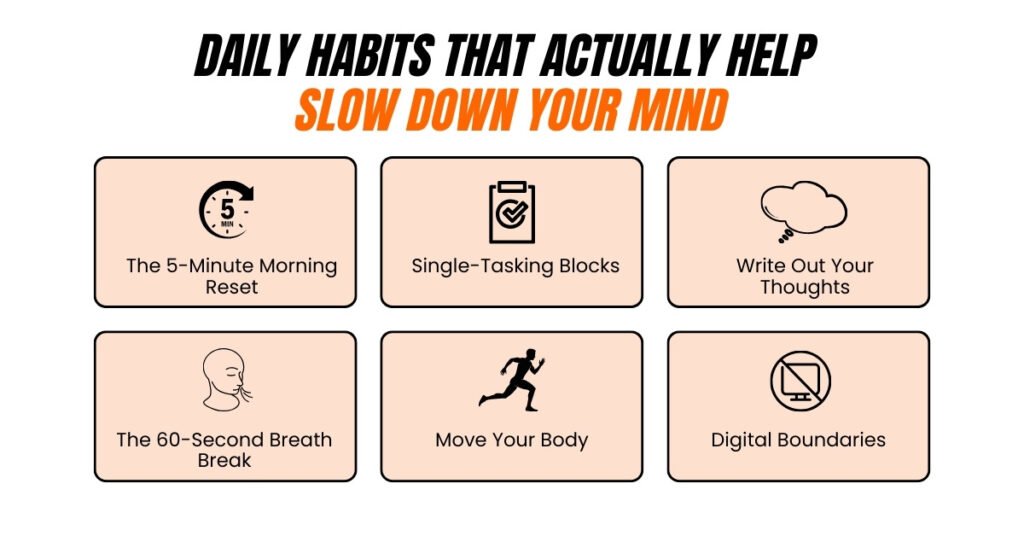
Habit 1: The 5-Minute Morning Reset
The first minutes after you wake up quietly shape your entire day. When you grab your phone right away, your brain jumps into alerts, messages, and decisions. That creates a fast, restless pace before you even stand up. A short morning reset sends the opposite signal: slow, steady, and focused.
Choose one quiet activity and stick with it. You can stretch gently, take slow breaths, or simply sit in silence with your eyes open. This isn’t about perfection. It’s about giving your mind a calm starting point instead of chaos.
Mornings shape the brain because they set the tone for how you react to everything that follows. If you begin calm, you handle problems with more patience, clarity, and emotional balance.
If you feel too busy, start tiny. Try one minute for a week. Then add another. Even a short pause helps you feel less rushed, more present, and more ready for the day ahead. Over time, this becomes a grounding ritual your mind starts to look forward to.
Key reminders:
- Keep it quiet and simple
- Avoid checking your phone first
- Focus on slow breathing and gentle awareness
Habit 2: Single-Tasking Blocks (Instead of Multitasking)
Many people believe multitasking means getting more done. In reality, it makes the brain work harder. Every time you switch tasks, your focus breaks and your thoughts scatter. This is one of the main reasons the mind feels noisy and overwhelmed.
Single tasking does the opposite. You pick one task, set a short time block, and give it your full attention. Ten to fifteen minutes is enough. When you do this, your brain settles into a smoother rhythm. You think clearer, work cleaner, and feel less stressed.
A simple example: instead of checking emails all day, answer them in one focused block. When the block ends, close the inbox and move on. You’ll notice fewer mistakes and more free mental space.
To support this habit, keep a “later list.” When a new idea or task pops into your head, write it down instead of chasing it. This keeps you organized while protecting your peace of mind.
Single tasking builds mental calm because it teaches your brain that not everything needs attention right now. You move through the day with more control instead of constantly reacting.
Helpful guidelines:
- Work in short, focused bursts
- Remove distractions during the block
- Use the “later list” instead of switching tasks
Habit 3: Write Out Your Thoughts (Brain Dump)
Your mind gets noisy when it tries to hold too many things at once. A brain dump gives your thoughts a place to go instead of spinning inside your head. It’s simple: grab paper or a note app and write everything that is crowding your mind. No editing. No structure. Just empty it out.
Use this anytime you feel overwhelmed, stuck in worry, or unable to focus. When you see your thoughts on paper, they usually feel less scary and more manageable. It also becomes clear which problems are real and which are just mental noise.
Set a timer for three minutes and start with the question: “What’s spinning in my head?” List anything that shows up. After the timer ends, take a breath and read what you wrote. Often, you’ll realize that only one or two things actually need attention.
This habit builds emotional clarity and reduces overthinking. It helps your brain relax because it no longer has to store every idea and worry at once. Over weeks, you’ll notice that your mind feels lighter, especially during busy seasons.
Simple tips:
- Write freely, without judging your thoughts
- Use it during stressful days or before sleep
- Pick one small action after you finish writing
Habit 4: The 60-Second Breath Break
When your thoughts start racing, your breathing usually speeds up without you noticing. Fast breathing tells the brain something is wrong, which makes stress rise even more. A short breath break interrupts that pattern. It reminds your body that you are safe, even if the moment feels tense.
Use this simple rhythm: inhale slowly for 4 seconds, then exhale gently for 6 seconds. The longer exhale is important because it activates your body’s natural calming response. With each breath, your heart rate begins to settle, your shoulders drop, and your mind has space to slow down.
This technique fits almost anywhere in daily life. Use it in traffic when frustration builds. Use it in meetings when pressure rises. Use it before bedtime when your brain won’t stop thinking. One quiet minute can shift the entire tone of your mood.
The more you practice, the faster your brain recognizes the signal. Over time, it becomes easier to calm yourself without forcing it. You simply breathe, and your system follows your lead.
Helpful reminders:
- Keep your breathing smooth and comfortable
- Focus on the feeling of air moving in and out
- Stop if you feel dizzy and continue gently later
Habit 5: Move Your Body (Even Lightly)
Stress doesn’t only live in the mind; it settles in the body too. Tight shoulders, stiff neck, heavy chest — these are signs that tension has built up. Light movement helps release that stored stress so it doesn’t turn into constant mental noise.
You don’t need long workouts or intense exercise. A short walk, stretching your back, or gently shaking your arms can be enough to create change. Movement increases blood flow and encourages the brain to release chemicals that support calm and focus. Many people notice they think more clearly after even a few minutes of walking.
Try using this habit right after stressful work or emotional moments. Instead of staying stuck in the chair, stand up and move for 8–10 minutes. Treat this as a reset button, not wasted time. You often return to your work with more energy and a quieter mind.
Light movement also helps your body burn off the stress signals created during busy or emotional days. It reminds your nervous system that the situation is manageable and temporary.
Practical ideas:
- Walk outside if possible, even for a short loop
- Stretch areas that feel tight
- Combine movement with slow breathing for extra calm
Habit 6: Digital Boundaries (Tiny but Powerful)
Our devices compete for our attention every minute. Notifications pull us into conversations, updates, and information we didn’t ask for. This constant input keeps the brain alert and overloaded, which makes it harder to relax or think deeply.
Creating digital boundaries isn’t about avoiding technology. It’s about choosing when and how you use it. Start by turning off notifications that aren’t truly necessary. Each alert you remove gives your brain fewer reasons to jump into stress mode.
Next, create at least one daily “no phone” window. It might be while eating, during your morning routine, or in the hour before sleep. At first, it may feel uncomfortable because your brain is used to constant stimulation. After a while, the quiet becomes refreshing and peaceful.
These boundaries reduce mental noise and rebuild your ability to focus. You become more present in conversations, more aware of your thoughts, and less controlled by constant digital demands.
Simple ways to start:
- Keep your phone out of reach during important tasks
- Use airplane mode at night if possible
- Choose set times to check messages instead of all day
Habit 7: Evening Wind-Down Ritual
Your brain needs a gentle transition from busy daytime thinking to restful nighttime mode. When you stay active, scroll late, or have heavy conversations before bed, your mind stays alert. This makes it hard to fall asleep and easy to wake up tired.
An evening wind-down ritual helps your body understand that the day is closing. Start by avoiding screens, caffeine, or intense discussions before sleep. These keep the brain awake and stimulate worries or problem-solving thoughts.
Instead, choose calm, simple activities. You might journal for a few minutes, write down tomorrow’s tasks, read something light, or sit under warm lighting. Repeat the same steps most nights so your brain starts to associate them with rest.
This small habit prepares your mind for deeper sleep. And when sleep improves, everything improves alongside it — your mood, focus, patience, and energy. A calm night leads to a calmer tomorrow.
Personal note: I once ended every night scrolling on my phone, thinking it helped me relax. Instead, my mind stayed wired and I lay awake replaying the day. When I switched to journaling and reading quietly, it took time, but my thoughts slowed down and falling asleep felt easier. It became one of the most helpful changes I made.
Try This Today: A Simple Starter Plan
Big changes often begin with small, steady actions. This simple plan is designed to fit into busy days while still helping your mind slow down. You don’t need special tools or long routines. Just commit to a few short moments of calm that guide your brain back to balance.
Morning (5 minutes)
Start your day with the Pause → Breathe → Notice → Act framework. These few minutes set the tone for the rest of your day. Instead of rushing into noise and stress, you begin with clarity and control.
Use the time to pause, take slow breaths, notice how you feel, and choose one gentle next step. This might be planning your priority for the day or simply deciding to move calmly through the morning. Even small intention creates a calmer mindset.
Key reminders:
- Avoid checking your phone first
- Keep the space quiet if possible
- Focus on slow, steady breathing
Afternoon (2–3 minutes)
As the day gets busy, your mind starts collecting stress and unfinished thoughts. A quick reset helps prevent overwhelm from building. Take two to three minutes for a brain dump or a short breath break.
If you choose the brain dump, write down everything spinning in your head. If you choose breathing, follow the calm inhale and longer exhale pattern. Both options give your brain relief and make the rest of the day feel lighter.
This short pause teaches your mind that you can slow down even in the middle of work or school. It’s a simple habit that keeps stress from stacking up.
Evening (10 minutes)
Evenings are your chance to gently slow the day down. Start with a short walk or light stretch. Moving your body helps release tension and signals that the busy part of the day is ending. You’ll often notice your thoughts soften as your body relaxes.
After that, follow a no-screen wind-down routine. Turn off devices, lower the lights, and do something calming like reading, journaling, or sitting quietly. This helps your brain shift into rest mode instead of staying alert.
Better evenings usually lead to better sleep, and better sleep supports a calmer mind the next day.
What People Usually Get Wrong (And How to Fix It)
Many people want a calmer mind, but they get stuck because of common misunderstandings. These ideas can create pressure, disappointment, and self-criticism. Clearing them up makes the whole process feel lighter and more realistic.
One mistake is trying to completely empty the mind. The brain is designed to think. Forcing silence often leads to frustration. Instead, aim to slow your thoughts and guide them gently. Calm is not the absence of thinking; it is learning to move through thoughts without getting carried away.
Another common problem is doing everything at once and then quitting. People try five habits in one day, feel overwhelmed, and stop. The better approach is to start small and be consistent. One simple habit practiced daily works better than ten habits tried for a week.
Some believe that calm means never feeling stressed again. That expectation creates guilt the first time stress shows up. Stress is part of life. The goal is not to remove it completely, but to handle it with more awareness and control.
Others think these ideas only work for naturally calm people. In reality, anyone can develop these skills. Just like learning to read or exercise, the mind becomes steadier with practice.
A helpful way to see it: slowing your mind is a skill. Skills grow over time. With patience and repetition, your ability to reset, breathe, and refocus becomes stronger — and life begins to feel easier to manage.
When Slowing Your Mind Feels Hard
There will be days when calming your thoughts feels almost impossible. Your mind may race, your body may feel tense, and nothing seems to work. This doesn’t mean you’re failing. It simply means you’re human, and your brain is responding to stress the way it was designed to protect you.
It helps to remember that tough moments are normal. Everyone has days when thoughts run faster than usual. Instead of fighting yourself, try to respond with patience. Progress is not always smooth, and small steps still count.
When things feel heavy, gentle support can make a difference. Talk to someone you trust, write your thoughts in a journal, or give yourself real rest. Sometimes the best choice is a slower day, not a harder push. These simple actions remind your mind that it is safe to slow down.
If your thoughts feel constant, overwhelming, or start affecting daily life, seeking support is okay. Speaking with a professional, mentor, or counselor can provide guidance and tools that make the journey easier. Reaching out is a strength, not a weakness.
The main message is simple: you are not alone in this process. Calming your mind is a practice, and like any practice, it grows with time, patience, and kindness toward yourself.

Final Takeaway: Small Habits, Big Difference
The main message is simple: you don’t need dramatic changes to slow down your mind. Small habits practiced daily can create real peace over time. Each pause, breath, walk, and quiet moment teaches your brain a new, calmer way to respond to life.
Progress happens when you experiment, not when you chase perfection. Some habits will fit easily, and others may take practice. That is completely okay. What matters is staying curious, noticing what helps, and making gentle adjustments along the way.
Choose one habit from this guide and start today. Keep it small, keep it consistent, and let the results build naturally. With patience and practice, your mind learns that calm is possible — not just once, but again and again.
Frequently Asked Questions
How can I slow down my mind quickly when I feel overwhelmed?
A fast way is to pause and take slow, steady breaths. Inhale for 4 seconds and exhale for 6. This signals your body to relax and gives your brain a moment to reset. You can also focus on one small next step instead of trying to solve everything at once.
Does slowing my mind mean I should stop thinking completely?
No. The brain is designed to think. The goal is not to erase thoughts, but to guide them gently so they don’t control you. When you slow the pace, you think more clearly instead of feeling trapped in constant mental noise.
How long does it take to notice results from these habits?
Many people feel small changes within one to two weeks when they practice daily. The more consistent you are, the stronger the benefits become. Think of it like training a muscle: steady practice builds lasting calm.
What should I do if I keep slipping back into overthinking?
That is normal. When you notice it happening, return to one simple tool like breathing, writing your thoughts, or taking a short walk. Instead of judging yourself, refocus gently. Progress is built from repetition, not perfection.
Can slowing my mind help with sleep and daily focus?
Yes. Calmer thinking helps your body relax more easily at night and improves attention during the day. When your mind isn’t racing, you make clearer decisions, feel more balanced, and handle stress with more confidence.