
Your evening routine shapes how your next day feels. When you end your day with clarity and calm, you wake up with more energy, focus, and control. Most people go to bed thinking about unfinished tasks or scrolling on their phones, and that makes it harder to sleep well and start the next day strong.
A simple evening routine helps your mind slow down, your body relax, and your plans settle. You do not need anything complicated, just a few steps that help you reset after a long day.
From my own experience, once I stopped rushing through my evenings and created a small routine, my mornings felt lighter and my days became more productive. That is why this part of your day matters so much. Your evening truly sets the tone for tomorrow.
Table of Contents
15 Best Evening Routines to Reset Your Mind, Body, and Next Day
A calm and simple evening routine can make your nights easier and your mornings smoother. These routines are easy to follow, beginner friendly, and designed to help you reset after a long day. Let’s start with routines that help your mind slow down and settle before sleep.
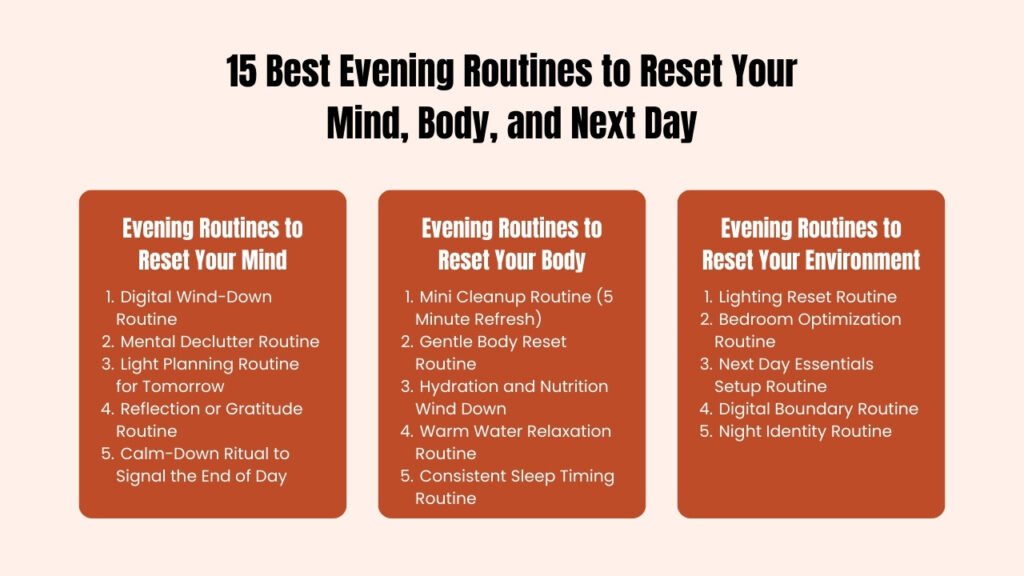
A. Evening Routines to Reset Your Mind
1. Digital Wind-Down Routine
Many people stay on their phones until the last minute without realising how much it affects their mind. Screens keep your brain active and make it harder for your body to switch into rest mode. A digital wind down creates a clear line between your busy day and your peaceful night.
Pick a simple screen cut off time, even 20 to 30 minutes before bed. Put your phone on silent, switch to night mode, and keep your devices away from your bed if possible.
Replace screen time with activities that calm you, like reading a few pages, stretching your body, writing your thoughts, or simply sitting in a quiet space. These small changes slow down your mind and prepare you for deeper rest.
Summary: Stop using screens 20 to 30 minutes before bed and switch to calming activities to help your mind slow down.
2. Mental Declutter Routine
Your mind collects tasks, worries, and random thoughts throughout the day, and bedtime is often when all of it shows up again. A mental declutter helps you release the thoughts that keep your mind busy at night.
Take a notebook or a sheet of paper and start writing down everything that is sitting in your head. It can be unfinished tasks, reminders, ideas, or even things that annoyed you. You do not need full sentences, just a simple list.
This routine is powerful because once your thoughts are written, your mind does not feel the need to hold onto them. You go to bed with a sense of relief instead of feeling overloaded.
Summary: Write down tasks, worries, and thoughts to clear mental clutter and sleep with a calmer mind.
3. Light Planning Routine for Tomorrow
Planning your next day at night helps you wake up with direction instead of confusion. You do not need a full schedule, just a simple plan.
Write down three important tasks you want to finish tomorrow. These tasks should be realistic and meaningful, so you do not feel overwhelmed.
You can also take a quick look at your calendar to see your meetings or deadlines. This prevents surprises in the morning and helps you start your day with confidence.
Summary: Choose three key tasks and review your schedule to start the next day focused and organised.
4. Reflection or Gratitude Routine
Ending your day with a moment of reflection helps you shift your mind away from stress and toward growth. Gratitude also improves your mood and helps you sleep better.
Write one thing you learned today, one thing that went well, or one thing you’re grateful for. Keep it simple and natural.
This small routine strengthens your mindset over time. It helps you notice positive moments, stay grounded, and go to bed feeling lighter instead of stressed.
Summary: Write one reflection or gratitude point to end your day calmly and improve your mindset.
5. Calm-Down Ritual to Signal the End of Day
Your brain works well with patterns. When you repeat a calming ritual every night, your body starts to recognize it as a signal that the day is ending.
Choose any simple activity that relaxes you. It can be drinking a warm tea, listening to soft music, lighting a candle, or doing gentle stretches. The goal is to slow your breathing and quiet your mind.
For me, tidying my workspace and dimming the lights helps a lot. These small actions tell my mind that it is time to relax, and I feel more settled as I move toward sleep.
Summary: Create a nightly ritual that signals the end of the day and helps your mind and body relax.
B. Evening Routines to Reset Your Body
6. Mini Cleanup Routine (5 Minute Refresh)
A messy space can make your mind feel busy without you even noticing it. A quick cleanup routine helps your body relax because your environment feels calmer and more organised.
Set a simple timer for five minutes and focus on small tasks like putting things back in place, clearing your desk, or tidying the area around your bed. You are not cleaning the whole house, you are just removing the visual clutter that can make your mind feel unsettled.
This tiny refresh makes your space feel lighter and gives your body the sense that the day is wrapping up. Even a small reset can make a big difference in how peaceful your night feels.
Summary: Spend five minutes tidying your space to reduce visual clutter and help your body relax before bed.
7. Gentle Body Reset Routine (Stretch or Mobility)
Your body holds stress from the entire day, especially in your neck, shoulders, and lower back. A gentle stretching or mobility routine helps release that tension so your body can fully rest.
You do not need a long workout. Simple movements like neck circles, shoulder rolls, light hamstring stretches, or slow breathing exercises are enough. Keep your movements slow and comfortable. You should feel your body loosening, not stretching to the point of discomfort.
This routine helps calm your nervous system, reduces stiffness, and signals your body that it is safe to relax. It is great for anyone who sits a lot or feels tight at the end of the day.
Summary: Do light stretches or mobility movements to release tension and prepare your body for restful sleep.
8. Hydration and Nutrition Wind Down
What you eat and drink in the evening affects how well you sleep. A simple wind down routine helps your body settle without discomfort or restlessness.
Avoid heavy meals, spicy foods, or caffeine too close to bedtime because they can make it harder for your body to relax. Choose something light if you feel hungry, like a banana, a warm drink, or a small snack that does not upset your stomach.
Stay lightly hydrated, but do not drink too much water right before bed to avoid waking up often. Your goal is to keep your body balanced and comfortable so you can sleep more peacefully.
Summary: Eat light, avoid caffeine, and stay gently hydrated to support smoother and more restful sleep.
9. Warm Water Relaxation Routine
Warm water can calm your muscles, lower tension, and help your body feel ready for bed. A warm shower or bath works as a natural sleep cue for many people.
The warmth helps your muscles relax, and the quiet moment gives your mind a chance to slow down. When you step out of warm water, your body temperature drops slightly, which naturally makes you feel sleepy.
You do not need a long bath. Even a quick warm shower can help you unwind after a stressful day and settle into a calmer state for the night.
Summary: Take a warm shower or bath to relax your muscles and signal your body that it is time to sleep.
10. Consistent Sleep Timing Routine
Your body loves consistency. Going to bed at a similar time each night helps your internal clock stay balanced, which makes falling asleep and waking up easier.
You do not need a strict schedule, just a general sleep window that feels realistic for your lifestyle. Aim to keep your bedtime and wake up time within the same range most days.
When your sleep timing becomes steady, your body learns when to release melatonin, when to relax, and when to prepare for rest. Over time, this routine gives you deeper sleep and smoother mornings.
Summary: Stick to a simple, consistent sleep window to help your body fall asleep easier and wake up more refreshed.
C. Evening Routines to Reset Your Environment
11. Lighting Reset Routine
Light has a strong effect on your brain. Bright lights keep your body alert, while soft and dim lights tell your mind that the day is coming to an end. A lighting reset helps your brain enter a calmer state without forcing anything.
Start by lowering the brightness of the lights in your room. Switch to warm lamps if you have them, or simply turn off the brightest lights and keep softer ones on. This small shift sends a gentle signal to your brain that it is time to slow down.
You can also reduce the brightness of your screens or turn on night mode to avoid unnecessary strain on your eyes.
Summary: Dim your lights in the evening to help your brain understand that it is time to slow down and prepare for rest.
12. Bedroom Optimization Routine
Your bedroom should feel like a calm and comfortable space, not a place filled with distractions. A simple bedroom optimization routine helps you create an environment that supports better sleep.
Start by removing things that do not belong in your sleeping space, like work items, scattered clothes, or loud gadgets. Make your bed, fix your pillows, and create a clean, peaceful atmosphere.
Check your room temperature. Most people sleep better in a slightly cooler room. You can also use soft blankets, breathable sheets, or blackout curtains if needed. A few small changes can make your bedroom feel more restful and inviting.
Summary: Make simple changes to your bedroom so it feels calm, clean, and comfortable for better sleep.
13. Next Day Essentials Setup Routine
Preparing your essentials the night before helps your morning feel smoother and less stressful. This routine saves you time and stops you from rushing when you wake up.
Lay out your clothes so you do not waste energy deciding what to wear. Pack your bag, place your keys in a fixed spot, and set up anything you need for work or school. If you use a workspace, tidy it and make it ready for the next day.
This small routine brings a sense of order, and you wake up feeling prepared instead of overwhelmed. Your future self will thank you for doing a little preparation the night before.
Summary: Prepare your clothes, bag, and workspace at night to make your morning simple, smooth, and stress free.
14. Digital Boundary Routine
Technology can easily disturb your rest if you do not set boundaries. A digital boundary routine helps protect your sleep from unnecessary noise and distractions.
Turn on do not disturb mode, silence notifications, and set your phone to night mode if needed. Keep your phone away from your bed so you are not tempted to check it out of habit.
You can also set specific limits, like no social media after a certain time or only using your phone for essential tasks in the evening.
This routine helps you end your day with peace instead of digital noise and gives your mind space to rest.
Summary: Set digital limits by silencing notifications and reducing screen use to protect your evening peace.
15. Night Identity Routine
Your environment affects your mindset, and a night identity routine helps you shift into a calmer, more grounded version of yourself. It is like choosing who you want to be for the last part of your day.
This routine can be a mix of actions that help you disconnect from the busy day. Maybe you change into comfortable clothes, tidy your space, light a candle, or put on soft music. These small cues help you step into a calmer identity that belongs to the evening.
For me, dimming the lights, cleaning my workspace, and slowing my breathing helps me enter my night identity. It feels like I am closing the day gently and choosing peace over chaos. It is a small, powerful shift that anchors discipline and calm.
Summary: Create a calm night identity by using small actions that help you mentally and physically shift into evening mode.
Ready to Use Evening Routine Templates
Everyone has different schedules, energy levels, and responsibilities, so an evening routine should feel simple and flexible. These templates help you start right away, even on busy or stressful days. You can use them as they are or adjust them to fit your lifestyle. The goal is to make your evenings calmer and your next day smoother.

10 Minute Routine for Beginners or Busy Days
This routine is perfect when you want a quick reset without adding pressure to your night. It helps you unwind even when time is limited.
- Take one minute to dim your lights and silence your notifications.
- Spend two minutes doing a quick mini cleanup to reset your space.
- Write your thoughts for two minutes to calm your mind.
- Choose three simple tasks for tomorrow so your morning feels planned.
- Stretch your body for one to two minutes to release tension from the day.
This short routine helps you settle your mind and body quickly. It is a simple way to feel organised and calm even on the busiest days.
20 to 30 Minute Balanced Reset Routine
This routine works well when you have enough time to unwind slowly. It gives you a steady reset for your mind, body, and environment.
- Start by putting your phone away and lowering your lights.
- Spend five minutes clearing your space to create a lighter atmosphere.
- Do light stretching or mobility work to relax your muscles.
- Write your thoughts, reflections, or one gratitude point.
- Prepare your clothes, workspace, or bag for tomorrow.
- End with a calm ritual like reading, breathing slowly, or listening to soft music.
This routine creates a gentle transition from a busy day into a calm night. It helps you feel balanced, clear, and ready for restful sleep.
Deep Reset Routine for High Stress Days
This routine is for the days when stress stays with you even in the evening. It helps your mind and body release the tension you have been carrying.
- Begin with warm lighting and a slow break from screens.
- Spend five to ten minutes writing anything that is weighing on your mind.
- Take a warm shower or bath to relax your muscles and slow your thoughts.
- Do gentle stretching to settle your breathing and release tightness.
- Prepare a few essentials for tomorrow to avoid morning stress.
- End with quiet reflection or slow breathing to settle your emotions.
This routine helps you ease out of stressful days in a healthier way. It gives your mind and body the deep reset they need to rest well.
Final Thoughts: Small Evening Shifts Create Big Life Changes
Your evening routine does not need to be perfect or long. Even the smallest changes can create a big difference in how you feel the next morning. When you end your day with calmness and clarity, you give yourself a better chance to wake up focused, relaxed, and ready to start strong.
The goal is not to follow every routine at once. It is to choose a few simple steps that help you breathe a little easier at night. These tiny actions may look small, but they build real progress when you do them consistently. Over time, they shape your mood, your energy, and the way you show up in your everyday life.
From my own experience, the biggest improvements came from the smallest habits. I did not change everything overnight. I just picked a few routines that felt right for me and stayed consistent. Slowly, I felt calmer before bed and more grounded when I woke up. Those tiny evening shifts added up to bigger changes in my days.
If you start with even one small routine tonight, you are already moving in the right direction. Keep it simple, keep it gentle, and give yourself time. Your evenings have the power to reset your mind and set the tone for a better tomorrow, one small win at a time.
Frequently Asked Questions
What is the best time to start an evening routine?
The best time is the moment your day begins to slow down. For many people, this is about 30 to 60 minutes before bed, but it can be earlier if your schedule is busy. The key is to choose a time that feels natural and allows you to wind down without rushing.
How long should a good evening routine take?
A good evening routine can take as little as ten minutes or as long as thirty minutes. It depends on your lifestyle and what helps you relax. Even short routines can make a big difference when you follow them consistently.
What if I cannot follow my routine every day?
It is completely fine. Evening routines are meant to support you, not add pressure. If you miss a day or two, just start again the next night. Consistency matters more than perfection, and even small efforts help.
Can evening routines help reduce stress and anxiety?
Yes, they can. Simple steps like writing your thoughts, dimming your lights, stretching your body, or limiting screen time help your mind and body settle. These calming actions make it easier to relax and reduce the stress that builds up during the day.
How do I choose the right evening routine for my lifestyle?
Start by picking one or two routines that feel easy and natural for you. Test them for a few nights and see how you feel. Your routine should help you relax, sleep better, and wake up clearer, so choose steps that fit your comfort level and daily rhythm.